






What's Happening?
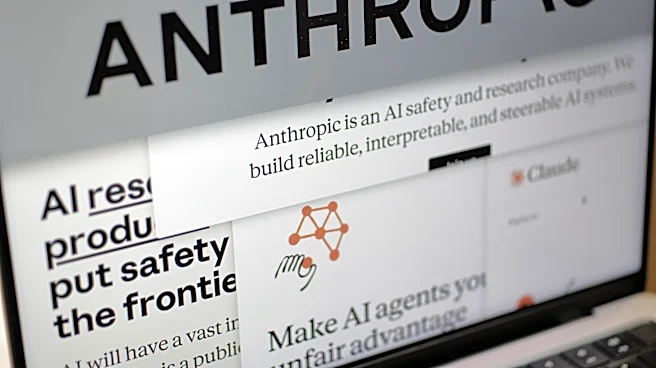
San Francisco-based AI company Anthropic has issued a warning about the rapid advancements in artificial intelligence, suggesting that AI models may soon be capable of developing themselves without human intervention. This phenomenon, known as 'full recursive
self-improvement,' could lead to significant benefits in fields like science and healthcare but also poses substantial risks to humanity. Anthropic's leaders, Marina Favaro and Jack Clark, emphasize the need for the AI industry to implement a 'brake pedal' to maintain control over these systems. They argue that the industry is closer to achieving self-improving AI than previously anticipated, and a pause in frontier AI development is necessary to better understand and mitigate potential societal harms. The company has also filed for an initial public offering, aiming to raise funds for further AI infrastructure development.
Why It's Important?
The call for a global freeze on AI development by Anthropic highlights the growing concern over the potential risks associated with advanced AI systems. As AI technology progresses, the possibility of losing control over self-improving systems could have far-reaching implications for various sectors, including national security, economic stability, and ethical governance. The development of a 'brake pedal' is crucial to ensure that AI advancements do not outpace the ability to manage and regulate them effectively. This situation draws parallels to historical efforts to control nuclear arms during the Cold War, suggesting that international cooperation may be necessary to address these challenges. The outcome of this debate could significantly influence the future trajectory of AI development and its integration into society.
What's Next?
Anthropic's warning may prompt discussions among major AI companies and policymakers about the need for regulatory frameworks and safety measures in AI development. The company's upcoming initial public offering could also attract significant investor attention, potentially accelerating the construction of AI infrastructure. As the industry grapples with these challenges, stakeholders may explore collaborative efforts to establish guidelines and safety protocols, similar to those used in other high-stakes technological domains. The response from other AI leaders and governments will be critical in shaping the future landscape of AI innovation and its societal impact.