
What's Happening?
A new book by Jim Windolf, titled 'Where the Music Had to Go: How Bob Dylan and the Beatles Changed Each Other—And the World,' explores the transformation of rock and roll from a form of disposable entertainment
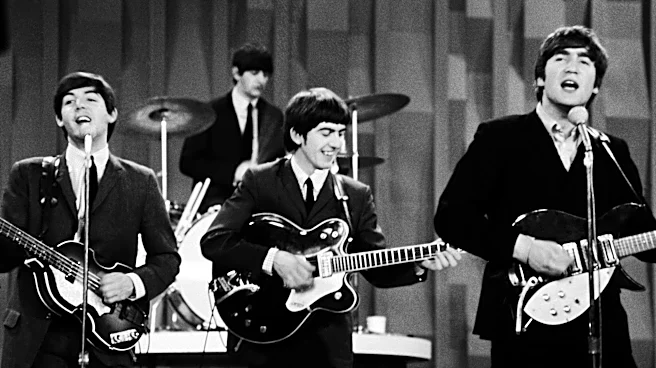
into a recognized art form. The book highlights the mutual influence between Bob Dylan and The Beatles, particularly focusing on how their work has evolved over the decades. Paul McCartney and Bob Dylan, both in their eighties, continue to perform and create music, embodying what theorist Theodor Adorno described as 'late style.' This concept refers to the mature phase of an artist's career, characterized by a deeper, more reflective approach to their work. McCartney's recent performances, including his 'Got Back Tour,' and Dylan's continuous touring, exemplify this enduring dedication to their craft.
Why It's Important?
The ongoing contributions of Paul McCartney and Bob Dylan to music highlight the potential for artists to remain relevant and influential well into their later years. Their perseverance challenges the notion that rock and roll is solely a young person's genre, instead presenting it as a lifelong pursuit. This evolution in perception can inspire both current and future generations of musicians to view their careers as long-term artistic journeys. Additionally, the continued success and creativity of these artists underscore the importance of adaptability and reinvention in maintaining cultural and artistic significance over time.
What's Next?
As McCartney and Dylan continue to perform and release new music, they set a precedent for other aging artists to follow. Their ability to reinterpret and reframe their earlier works for contemporary audiences may encourage more musicians to explore their own 'late style.' This could lead to a broader acceptance and appreciation of older artists in the music industry, potentially influencing how record labels and concert promoters approach marketing and supporting veteran musicians.
Beyond the Headlines
The concept of 'late style' in rock and roll, as demonstrated by McCartney and Dylan, offers a new lens through which to view aging in the arts. It suggests that creativity does not diminish with age but can instead become more profound and meaningful. This perspective may also influence cultural attitudes towards aging, promoting a view of older individuals as valuable contributors to society and culture. Furthermore, the ongoing evolution of rock and roll as an art form reflects broader societal changes, including shifts in how we understand and value artistic expression across different stages of life.