





What's Happening?
Texas is experiencing a significant increase in demand for advanced concrete technologies due to a surge in industrial growth and heightened durability standards. This demand is driven by the need for infrastructure resilience, as industrial operators
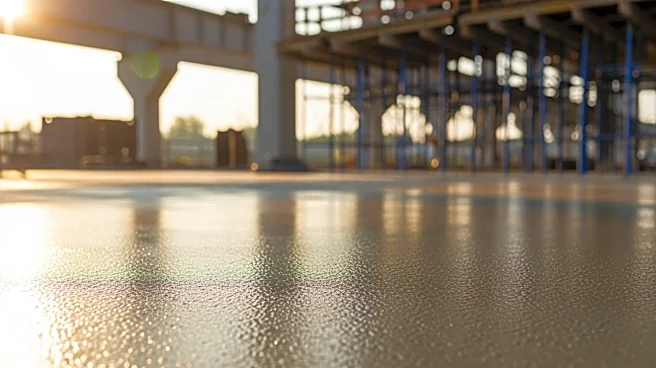
in Texas seek sustainable and long-term profitable solutions. The state leads the U.S. in cement shipments, consuming 18% of the national total. A notable example is the Röhms methyl methacrylate production facility in Bay City, Texas, which has successfully implemented Kryton International's Hard-Cem admixture to enhance floor durability under severe industrial conditions. This facility, the only one in the U.S. using C2-based LiMA technology, faces high-load vehicular traffic that can degrade conventional concrete surfaces. To address this, Röhms partnered with KLP Construction Supply to integrate Hard-Cem into their concrete specifications, ensuring long-term performance and reduced maintenance costs.
Why It's Important?
The increased demand for durable concrete solutions in Texas highlights a broader shift towards infrastructure resilience and sustainability. As industrial development continues to rise, the need for materials that can withstand intense mechanical stress without frequent repairs becomes crucial. This trend not only supports the longevity of infrastructure but also reduces the environmental impact by lowering the cumulative embodied carbon footprint of concrete. The successful implementation of advanced concrete technologies like Hard-Cem demonstrates the economic advantages of prioritizing lifecycle performance over short-term savings. This approach can lead to substantial dividends in operational stability and structural sustainability, benefiting asset owners and the broader industrial sector in Texas.
What's Next?
As Texas continues to lead in industrial growth, the demand for advanced concrete solutions is expected to rise further. Companies like Kryton International and KLP Construction Supply are likely to expand their reach and partnerships to meet this growing need. The focus on infrastructure resilience may also influence other states to adopt similar technologies, potentially leading to nationwide changes in construction practices. Additionally, the success of projects like the Röhms facility could encourage more industries to invest in durable materials, further driving innovation and sustainability in the construction sector.