




What's Happening?
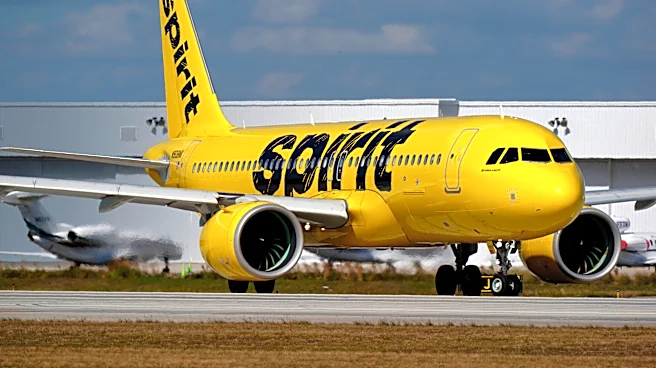
Spirit Airlines has ceased operations, leading to the loss of approximately 17,000 jobs. CEO Dave Davis attributed the collapse to a combination of factors, including rising jet fuel prices due to the conflict in Iran, failed merger attempts, and increased
competition from larger airlines. Spirit had been attempting to exit bankruptcy for the second time in less than a year, but the surge in fuel prices thwarted these efforts. The airline had been in talks with the Trump administration for a potential bailout, which would have involved a $500 million loan and a significant government stake in the company. However, negotiations with bondholders failed to reach an agreement, leading to the airline's shutdown.
Why It's Important?
The collapse of Spirit Airlines highlights the vulnerability of smaller carriers in the highly competitive airline industry, especially in the face of external economic pressures like fuel price surges. The shutdown not only affects the thousands of employees who lost their jobs but also impacts consumers who relied on Spirit for low-cost travel options. The situation underscores the challenges faced by airlines in maintaining operations amidst fluctuating economic conditions and the importance of strategic mergers and acquisitions in sustaining business viability. The failure to secure a bailout also reflects the complexities of government intervention in private sector crises.
What's Next?
In the wake of Spirit's collapse, other airlines are likely to absorb the market share left by Spirit, potentially leading to increased ticket prices due to reduced competition. The industry may see further consolidation as smaller carriers struggle to compete with larger, more financially stable airlines. The situation may prompt regulatory scrutiny over airline mergers and acquisitions, as well as discussions on the role of government support in stabilizing the airline industry during economic downturns.