
What's Happening?
A group of artists, including filmmakers and designers, are exploring the use of generative AI to push the boundaries of their creative work. Darren Aronofsky, known for his innovative filmmaking techniques,
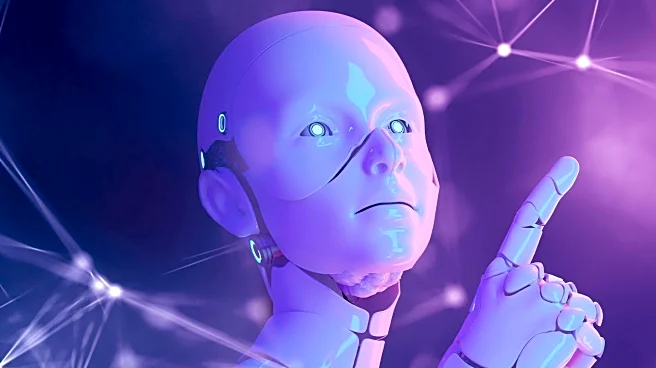
has partnered with Google DeepMind through his creative technology company, Primordial Soup, to integrate AI into film production. Their project, 'Ancestra,' directed by Eliza McNitt, uses AI to create realistic depictions of infants and complex anatomical scenes. Similarly, animation director Connie He is utilizing AI tools like Veo and Imagen to achieve painterly styles in animation that would be otherwise time-consuming. Wade Jeffree and Leta Sobierajski, a design duo, have collaborated with Google Labs to create 'Reflection Point,' a public sculpture that uses AI to generate diverse visual ideas. These projects highlight the potential of AI to enhance artistic expression by offering new tools and methods for creative exploration.
Why It's Important?
The integration of generative AI into creative fields represents a significant shift in how art and technology intersect. By leveraging AI, artists can overcome traditional limitations, such as time constraints and resource availability, to produce innovative works that were previously unattainable. This development could democratize access to advanced creative tools, allowing smaller teams to achieve high-quality results. The collaboration between artists and AI also raises questions about the future of creativity and the role of human input in artistic processes. As AI becomes more prevalent in creative industries, it may redefine artistic standards and open new avenues for storytelling and design, impacting how audiences engage with art and media.
What's Next?
As artists continue to experiment with AI, the technology is likely to become more integrated into mainstream creative processes. This could lead to broader acceptance and utilization of AI in various artistic disciplines, from film and animation to public installations. The success of these projects may encourage more artists to explore AI as a tool for innovation, potentially leading to new collaborations between tech companies and the creative sector. Additionally, as AI tools become more sophisticated, they may offer even greater possibilities for artistic expression, challenging traditional notions of authorship and creativity.
Beyond the Headlines
The use of AI in art raises ethical and philosophical questions about the nature of creativity and the role of technology in human expression. As AI-generated art becomes more common, it may challenge the value placed on human-created works and alter perceptions of originality and authenticity. Furthermore, the reliance on AI tools could lead to concerns about the loss of traditional skills and the potential for homogenization in artistic styles. These developments may prompt discussions about the balance between technological advancement and the preservation of human creativity.