







What's Happening?
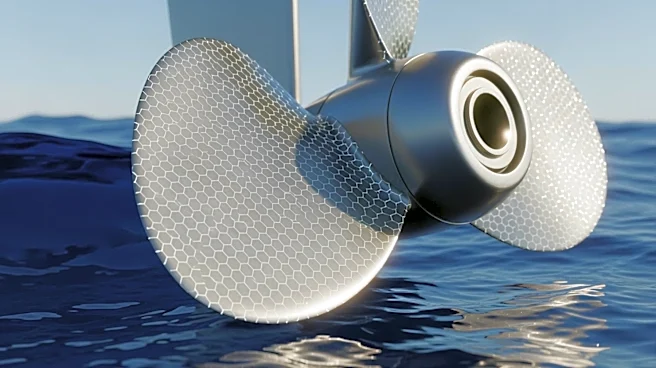
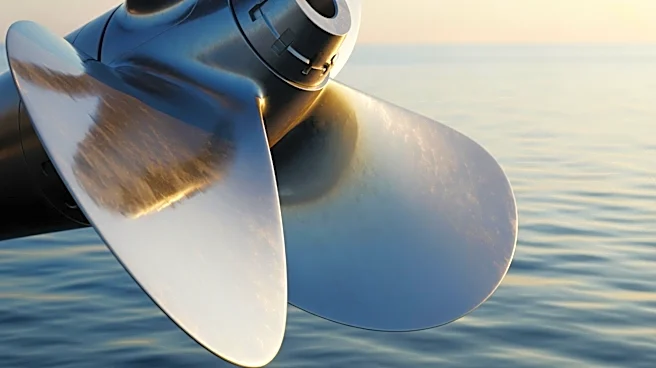
GIT Coatings has launched a new graphene-based propeller coating system named XGIT-VORTEX, designed for marine applications. This innovative system utilizes GIT's Amphiphilic Graphene Nanonetwork (AGN) technology and features a three-layer configuration.
The topcoat is engineered to prevent fouling attachment, keeping propellers cleaner over time. The mid-coat serves as a structural layer to absorb cavitation stress, reducing damage at blade edges and tips. The low-friction surface aims to maintain propeller smoothness throughout the drydock cycle. According to GIT Coatings, the system offers up to 5% fuel savings, improved resistance to cavitation-related damage, and stable propeller performance between drydockings. This development is part of a broader strategy to enhance lifecycle efficiency, improve CII performance, and reduce exposure under schemes like the EU ETS.
Why It's Important?
The introduction of XGIT-VORTEX is significant as it addresses key challenges in the maritime industry, such as fuel consumption, emissions, and maintenance costs. By improving propulsion efficiency, the coating system can help shipowners achieve better hydrodynamic performance and reduce operational costs. The graphene-enhanced technology offers a more durable solution compared to traditional propeller polishing, aligning with global maritime decarbonization goals. As shipowners and operators seek to optimize their fleets for environmental compliance and cost-effectiveness, innovations like XGIT-VORTEX provide a competitive edge in the market.
What's Next?
With the launch of XGIT-VORTEX, GIT Coatings is poised to expand its market presence in the marine industry. The company has already applied its coatings to over 600 vessels and propellers across various commercial segments since 2022. As the industry continues to prioritize decarbonization and efficiency, GIT Coatings' graphene-enabled technologies are likely to gain traction. Future developments may include further enhancements to the coating system and potential collaborations with shipowners to integrate these solutions into broader fleet management strategies.