
What's Happening?
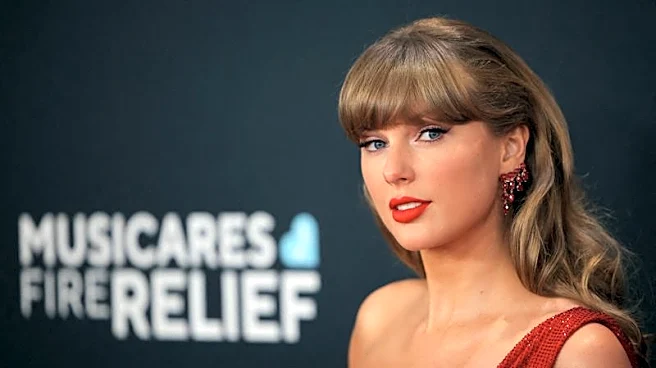
Taylor Swift has filed trademark applications to protect her voice and image from unauthorized use by artificial intelligence (AI). The applications include protection for audio clips of her saying 'Hey, it’s Taylor Swift' and 'Hey, it’s Taylor,' as well
as a photograph of her holding a pink guitar. This move is part of a broader trend among celebrities to safeguard their likenesses and voices from being simulated by AI without permission. The legal strategy aims to deter misuse by threatening potential federal lawsuits. However, the effectiveness of such trademarks remains uncertain, as they are not designed to cover every aspect of a performer's brand.
Why It's Important?
The rise of AI technology has made it easier to replicate the voices and images of celebrities, raising concerns about intellectual property rights and privacy. By seeking trademarks, Swift is attempting to set a legal precedent that could influence how AI-generated content is regulated. This could have significant implications for the entertainment industry, where unauthorized AI reproductions could impact artists' revenue and brand integrity. The move also highlights the challenges of enforcing intellectual property rights across different jurisdictions, as AI content can easily cross borders.
What's Next?
If Swift's trademark applications are approved, it could pave the way for other celebrities to take similar legal actions. However, the success of these trademarks in preventing AI misuse will depend on their enforceability and the willingness of courts to recognize such claims. The entertainment industry and legal experts will be closely watching the outcome, as it could lead to new regulations or guidelines for AI-generated content. Additionally, AI developers may need to consider more stringent ethical guidelines to avoid potential legal issues.