

What's Happening?
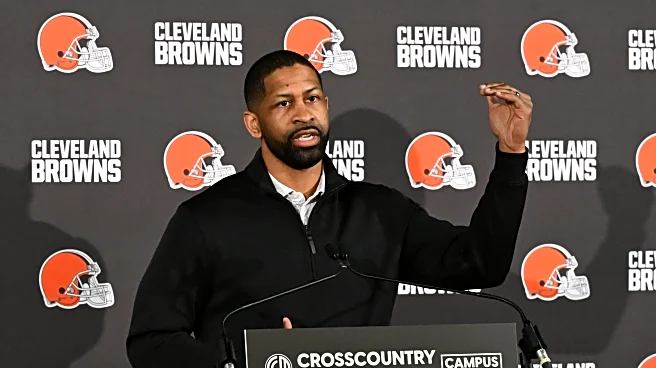
Cleveland Browns General Manager Andrew Berry is contemplating adjustments to the team's NFL draft strategy in response to significant changes in college football. The introduction of Name, Image, and Likeness (NIL) deals has allowed college athletes to earn money while still in school, leading many to extend their college careers. This shift has resulted in older players entering the NFL draft, prompting Berry to reconsider the team's approach to evaluating prospects. Berry emphasizes the importance of flexibility and case-by-case assessments rather than adhering to a rigid system. The Browns aim to adapt their draft evaluation process to account for these changes without completely overhauling their existing guardrails.
Why It's Important?
The evolving college
football landscape, driven by NIL deals, is reshaping how NFL teams approach the draft. For the Cleveland Browns, adapting to these changes is crucial to maintaining a competitive edge. By considering older prospects and those with multiple transfers, the team can potentially tap into a more experienced talent pool. This strategic shift could influence the Browns' long-term success, as they seek to build a roster that aligns with the new realities of college football. The ability to adapt to these changes may also set a precedent for other NFL teams, highlighting the importance of flexibility in draft strategies.
What's Next?
As the Browns evaluate their draft strategy, they will likely continue to monitor the impact of NIL deals on college football. The team's approach to the upcoming NFL draft will be closely watched, as it may signal broader trends in how professional teams adapt to the changing landscape. Other NFL teams may follow suit, adjusting their own strategies to account for older and potentially more seasoned college players. The Browns' decisions in the draft could influence their performance in the coming seasons, making this a pivotal moment for the franchise.