







What's Happening?
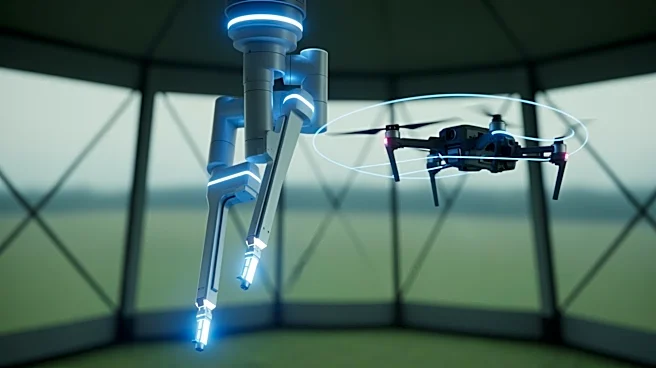
SS Innovations International Inc., based in Fort Lauderdale, Florida, has announced the development of several new surgical robotic systems, including the SSi Vimana Aero Drone System. This system is designed to deliver expert surgical care directly to soldiers
in active battle zones. The SSi Vimana Aero is deployed via a heavy-lift autonomous drone and is equipped with miniature robotic arms and surgical instruments. It allows a trauma surgeon to remotely operate the system from a command center, addressing critical injuries such as hemorrhaging and shrapnel extraction. The company aims to bridge the time gap between injury and medical evacuation, enhancing battlefield medical response. Additionally, SS Innovations is developing other systems like the SSi Avtara Humanoid Surgical Platform and the SSi Operion Mobile Operating Room, which are designed for various applications including healthcare, defense, and disaster response.
Why It's Important?
The introduction of the SSi Vimana Aero and other robotic systems by SS Innovations could significantly impact military medical operations by providing immediate surgical care in combat zones. This development has the potential to save lives by stabilizing injured soldiers before evacuation. Moreover, the broader application of these technologies in civilian healthcare could improve access to advanced surgical care in remote or underserved areas. The integration of robotics into medical workflows promises to enhance precision and efficiency, potentially reducing healthcare costs and improving patient outcomes. The use of drones and humanoid robots in medical settings also highlights the growing intersection of technology and healthcare, which could lead to further innovations in medical treatment and delivery.
What's Next?
SS Innovations plans to continue the development and clinical validation of its robotic systems, with a focus on integrating these technologies into existing medical infrastructures. The company is likely to seek partnerships with military and healthcare organizations to deploy these systems in real-world scenarios. As these technologies advance, regulatory approvals and safety validations will be critical steps in bringing them to market. The success of these systems could encourage further investment in medical robotics, potentially leading to new applications and innovations in the field.