





What's Happening?
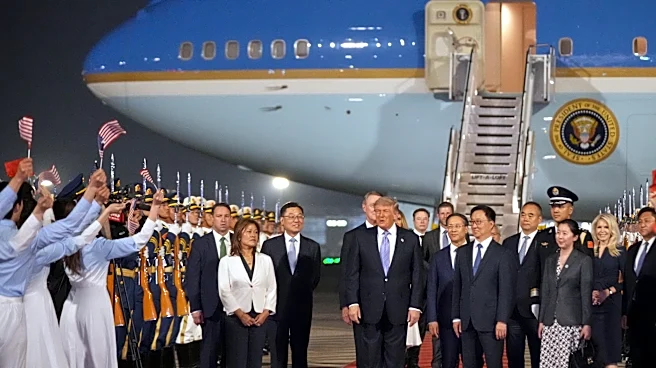
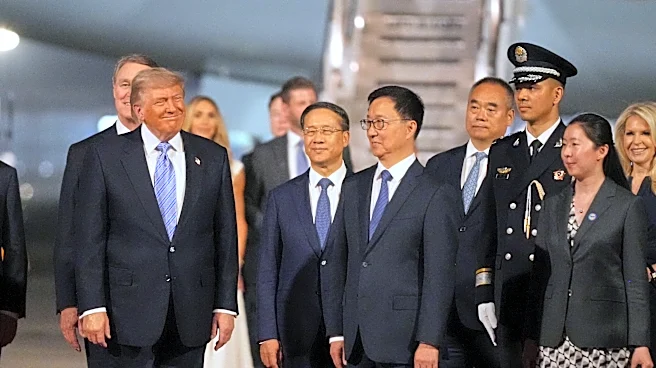
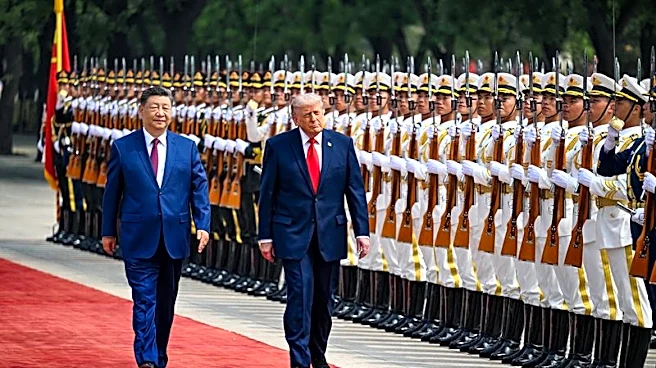
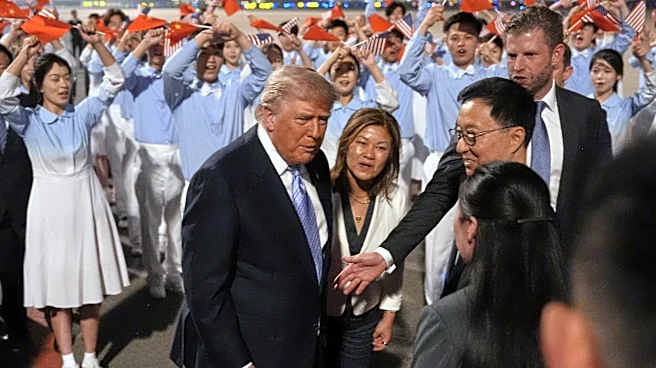
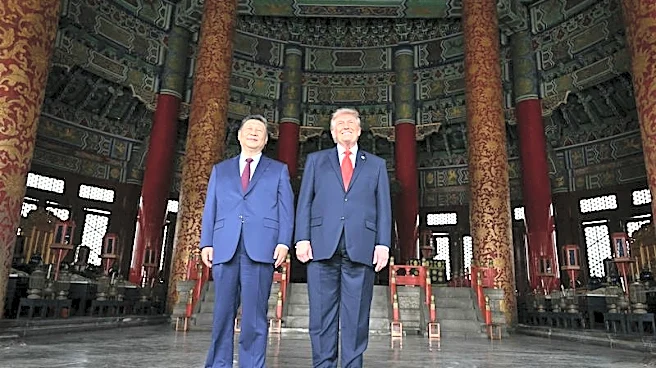
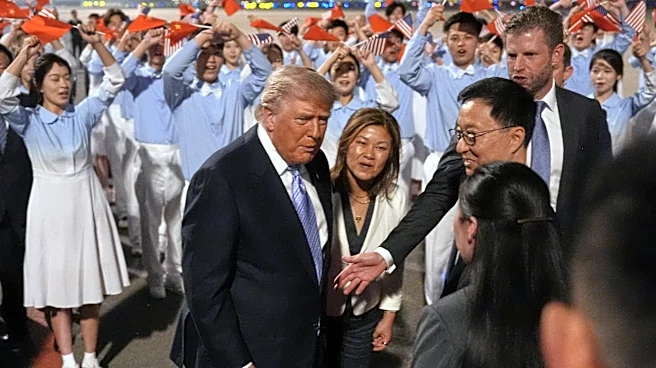
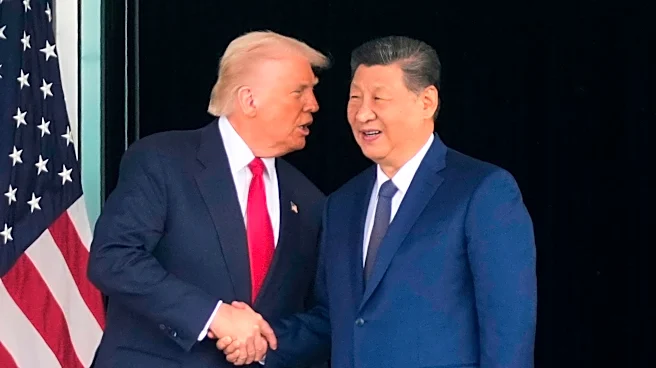
The summit between U.S. President Donald Trump and Chinese President Xi Jinping has led to a significant boost in U.S. stock markets, with the Dow Jones Industrial Average surging 370 points and the S&P 500 closing above 7,500 for the first time. The positive
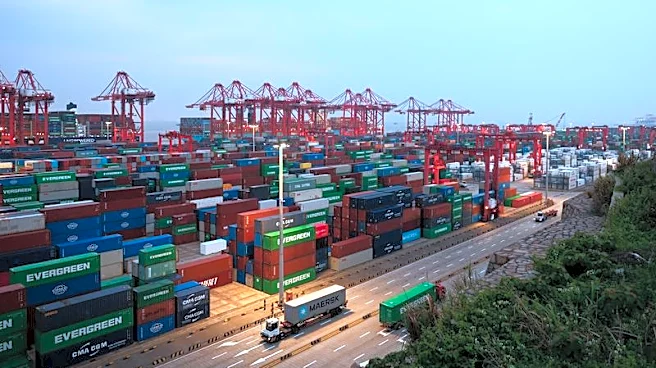
market response is attributed to the easing of trade tensions, as Trump announced China's order of 200 Boeing jets. The summit also included discussions on global conflicts and trade relations, with Xi promising to open China's markets wider to foreign businesses. However, Xi issued a warning regarding the handling of Taiwan, emphasizing the potential risks to U.S.-China relations.
Why It's Important?
The summit's outcomes have significant implications for international trade and economic relations between the U.S. and China. The easing of trade tensions is likely to benefit U.S. industries, particularly aerospace, and could lead to increased economic cooperation. However, the warning on Taiwan highlights ongoing geopolitical tensions that could impact future diplomatic relations. The market's positive response reflects investor optimism about potential economic growth and stability resulting from improved U.S.-China relations. The developments also underscore the importance of diplomatic engagement in addressing complex international issues.
What's Next?
The conclusion of the summit may lead to further diplomatic engagements, with Trump reportedly inviting Xi to visit the White House in September. The continuation of trade negotiations and potential agreements could further influence market dynamics and economic policies. Additionally, the handling of sensitive geopolitical issues, such as Taiwan, will remain a critical factor in shaping future U.S.-China relations. The business community will be closely monitoring the implementation of trade agreements and any shifts in policy that may arise from the summit.