
What's Happening?
Amazon has entered into a long-term agreement with The Good Rice Alliance (TGRA) to purchase over 685,000 carbon credits linked to methane emission reductions from rice cultivation in India. TGRA, backed
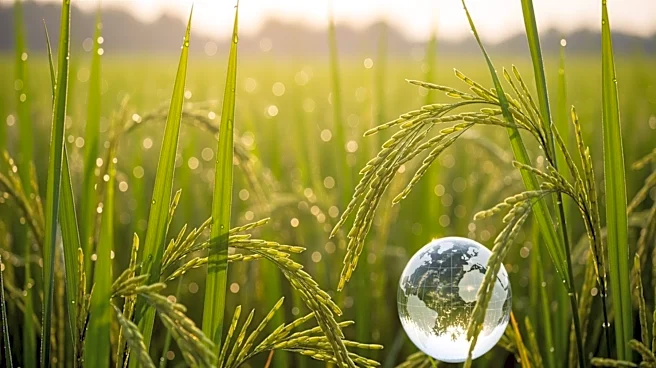
by Bayer, GenZero, and Shell, aims to scale climate-smart rice farming practices that reduce methane emissions. Conventional rice farming is a significant source of methane, a potent greenhouse gas. The initiative involves working with smallholder farmers to implement improved water-management practices, such as Alternate Wetting and Drying (AWD) and Direct Seeded Rice (DSR), to reduce emissions. The program also provides agronomic training and financial incentives to farmers.
Why It's Important?
This partnership highlights the growing corporate demand for science-backed climate solutions and the role of agriculture in addressing climate change. By reducing methane emissions, the initiative contributes to global efforts to mitigate climate change and supports sustainable agricultural practices. The collaboration with Amazon underscores the importance of private sector involvement in environmental initiatives and the potential for scalable solutions. The program not only aims to cut emissions but also to improve agricultural productivity and resilience, benefiting both the environment and local communities. The initiative serves as a model for integrating climate action with economic development.
What's Next?
The Good Rice Alliance will continue to expand its program across India, working with more farmers to implement sustainable practices. The initiative's success could lead to similar projects in other regions, further reducing agricultural emissions. The partnership with Amazon may inspire other corporations to invest in climate-smart agricultural solutions. Ongoing monitoring and verification of emission reductions will be crucial to ensure the program's effectiveness and credibility. The initiative's impact on methane emissions and agricultural productivity will be closely watched by stakeholders, including policymakers, environmental organizations, and the agricultural industry.