
What's Happening?
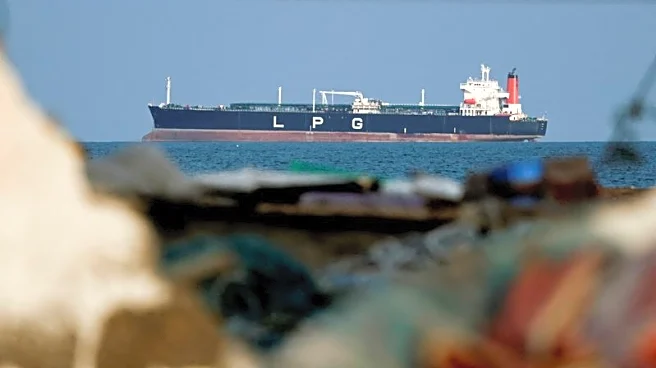
The ongoing conflict in Iran has led to a significant disruption in global oil supplies, particularly affecting the Strait of Hormuz, a crucial maritime route. This has resulted in a dramatic increase in oil and gasoline prices, with Brent crude rising
over 40% since the conflict began. Economists are concerned that this surge is worsening the 'K-shaped' economy in the U.S., where wealth and income inequality are becoming more pronounced. Higher-income households, who own more assets, continue to benefit, while lower-income households face increased financial strain due to rising fuel costs. The national average gasoline price has reached $3.79 per gallon, marking the highest point since October 2023.
Why It's Important?
The rise in oil and gasoline prices acts as a regressive tax, disproportionately affecting lower-income households who spend a larger share of their budget on energy. This situation exacerbates existing economic disparities, as these households are forced to cut back on other expenditures or incur more debt. The increased cost of fuel also impacts consumer spending, which is a significant component of the U.S. GDP. As households allocate more income to fuel, less is available for other goods and services, potentially slowing economic growth. The situation highlights the vulnerability of lower-income groups to global economic shifts and the need for policies that address such disparities.
What's Next?
If the conflict in Iran continues, oil prices may remain high, further straining household budgets and potentially leading to broader economic repercussions. Policymakers may need to consider interventions to mitigate the impact on lower-income households, such as subsidies or tax relief. Additionally, there could be increased pressure on the U.S. government to explore alternative energy sources to reduce dependency on volatile global oil markets. The situation may also prompt discussions on economic policies aimed at reducing inequality and supporting economic resilience.