










What's Happening?
The Fraunhofer Institute for Solar Energy Systems (ISE) has set a new world record for solar module efficiency, achieving a 34.4% efficiency rate with its III-V germanium solar photovoltaic (PV) module. This breakthrough was accomplished through the use
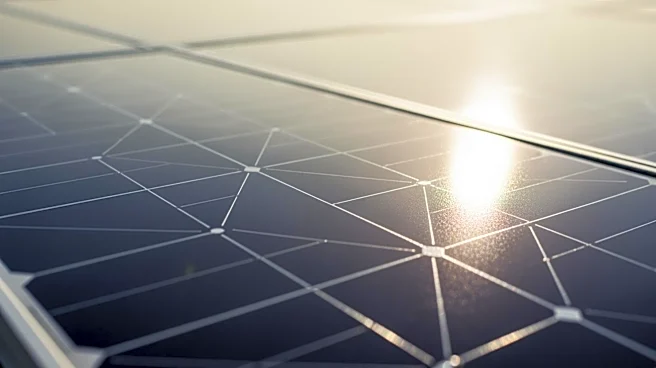
of shingled matrix technology, which allows for direct cell-to-cell contact without traditional solder-coated copper ribbons, thereby eliminating shading of active cell areas. The module, developed as part of the 'Vorfahrt' project, initially set a record earlier in the year with a 34.2% efficiency. The project involved collaboration with AZUR SPACE Solar Power, which adapted its triple solar cell technology for terrestrial use, and temicon, which provided anti-reflective coatings. This advancement represents a significant step forward in solar technology, particularly in terms of efficiency and potential applications.
Why It's Important?
This development is significant for the solar energy industry as it pushes the boundaries of solar module efficiency, which is crucial for maximizing energy output from solar installations. Higher efficiency modules can lead to reduced costs per watt of electricity generated, making solar power more competitive with traditional energy sources. This could accelerate the adoption of solar energy, contributing to global efforts to reduce carbon emissions and combat climate change. The use of shingled matrix technology also represents a shift in photovoltaic module construction, potentially setting a new standard for future solar technologies. The advancements made by Fraunhofer ISE could influence solar manufacturing processes and drive further innovation in the field.
What's Next?
The new solar module will be showcased at the Intersolar / The Smarter E 2026 event, providing an opportunity for industry stakeholders to explore its potential applications. The success of this project may lead to further research and development in shingled matrix technology and its integration into commercial solar modules. As the technology is refined and potentially adopted by other manufacturers, it could lead to widespread improvements in solar module efficiency. Additionally, the collaboration between Fraunhofer ISE and its partners may inspire similar partnerships aimed at advancing solar technology and increasing the viability of renewable energy solutions.