


What's Happening?
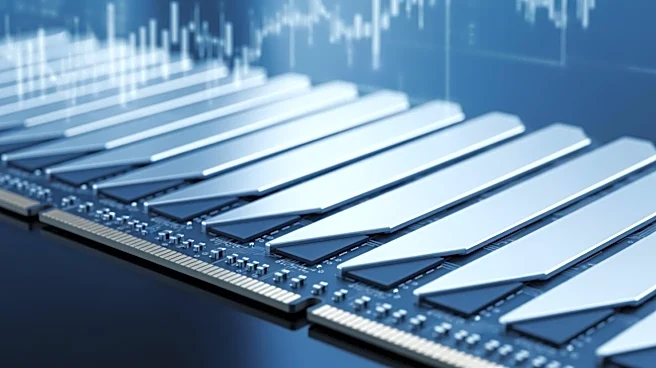
DDR5 RAM kit prices have seen a significant drop in the U.S., Europe, and China, according to market analyst Trendforce. This decline is attributed to recent price corrections in retail memory channels, influenced by market debates and technological developments.
Despite the retail price drop, contract memory prices remain stable, indicating a consumer-driven adjustment rather than a structural demand change. The report suggests that while retail prices fluctuate, the long-term fundamentals of the memory industry remain unchanged, with major suppliers maintaining stable contract prices.
Why It's Important?
The decrease in DDR5 RAM prices could benefit consumers and businesses by making high-performance memory more accessible. This trend may alleviate some financial pressure on PC gamers and tech enthusiasts who have faced high component costs. However, the stability of contract prices suggests that the industry is not experiencing a fundamental shift, and the long-term impact on the market remains uncertain. The situation highlights the complex dynamics of supply and demand in the tech industry, influenced by factors such as AI developments and global economic conditions.
What's Next?
The future of DDR5 RAM pricing will likely depend on broader industry trends, including the trajectory of AI technology and its impact on memory demand. If AI continues to grow, memory prices may stabilize or increase due to higher demand. Conversely, if AI demand decreases, prices could fall further. Stakeholders in the tech industry will need to monitor these developments closely to adapt their strategies accordingly. The situation underscores the importance of staying informed about market trends and technological advancements.