


What's Happening?
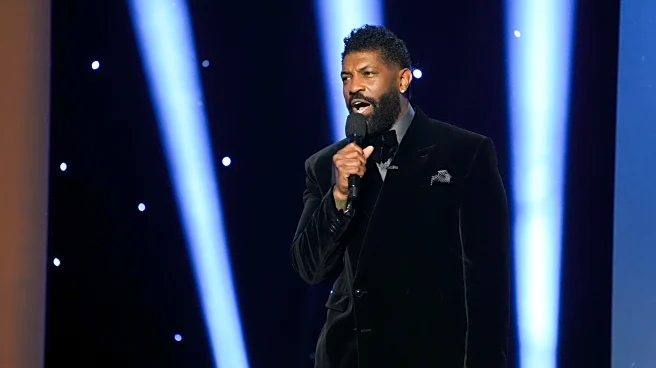
Delroy Lindo, an actor, publicly addressed the incident that occurred at the BAFTA Film Awards involving a racial slur shouted by an audience member with Tourette's syndrome. The incident took place while Lindo and his co-star Michael B. Jordan were presenting
an award. Lindo expressed gratitude for the support received following the event, describing it as a situation where something negative turned into a positive experience. The BAFTA organization has apologized for the incident, taking full responsibility for the racial slur that was broadcasted during the ceremony. The comment was not clearly audible but was included in the BBC's coverage of the event. John Davidson, a Tourette's campaigner and executive producer for a BAFTA-nominated film, was involved in the incident and left his seat during the ceremony.
Why It's Important?
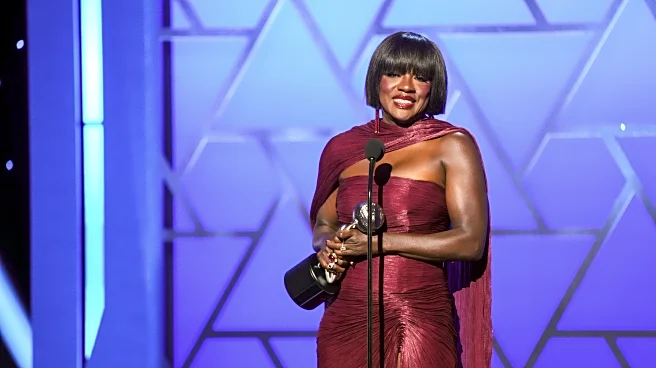
The incident highlights the challenges faced by individuals with Tourette's syndrome, a neurological disorder characterized by involuntary tics, including vocal outbursts. It also underscores the importance of sensitivity and understanding in public events, especially when dealing with disabilities. The BAFTA's response and apology reflect the organization's acknowledgment of the impact such incidents can have on public perception and the need for accountability. This event has sparked discussions about inclusivity and the representation of individuals with disabilities in media and public forums. The support shown to Lindo and Jordan at the NAACP Image Awards demonstrates solidarity and the potential for positive outcomes from challenging situations.
What's Next?
The BAFTA organization may implement measures to prevent similar incidents in the future, possibly including increased awareness and training for handling situations involving individuals with disabilities. Public discourse may continue to focus on the representation and treatment of people with Tourette's syndrome and other disabilities in media and entertainment. Stakeholders in the entertainment industry might consider adopting more inclusive practices and policies to ensure respectful and supportive environments for all participants.
Beyond the Headlines
This incident could lead to broader discussions about the portrayal of disabilities in media and the responsibilities of broadcasters in handling sensitive content. It may also prompt a reevaluation of how live events are managed, particularly in terms of accommodating individuals with neurological disorders. The situation serves as a reminder of the power of media to influence public attitudes and the importance of fostering an inclusive culture that respects diversity and differences.