



What's Happening?
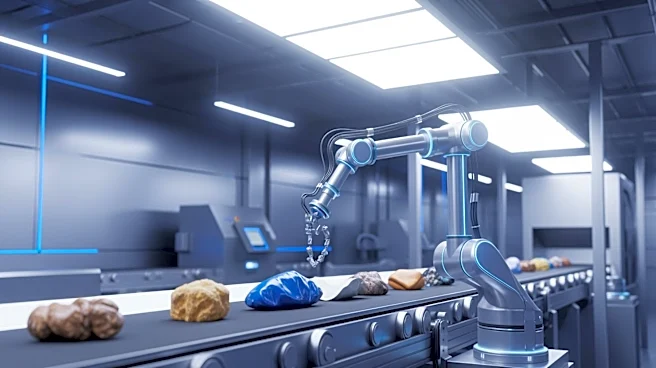
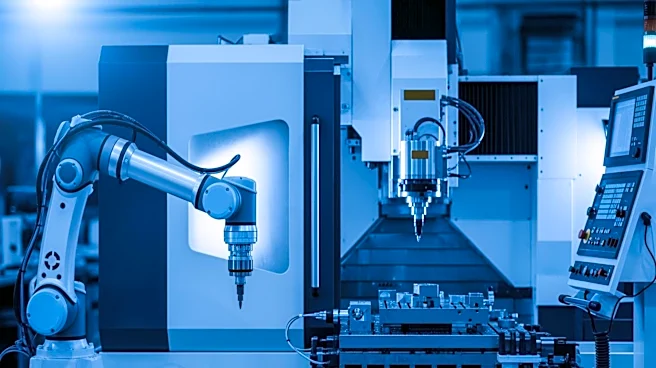
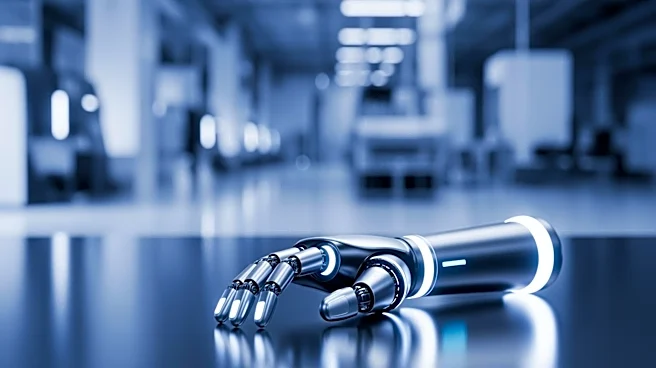
Robotic arms are increasingly being integrated with CNC machines, transforming manufacturing processes by enhancing efficiency and reducing costs. This integration allows robotic arms to perform tasks such as loading raw materials, transferring parts
between machines, and inspecting finished products without human intervention. The use of robotic arms in CNC environments is driven by the need to address labor shortages and improve production consistency. Companies like Universal Robots and KUKA are leading the charge, offering solutions that enable lights-out manufacturing and reduce manual loading variability. This shift is part of a broader trend towards automation in manufacturing, aiming to optimize operations and reduce reliance on human labor.
Why It's Important?
The integration of robotic arms with CNC machines represents a significant advancement in manufacturing technology, offering potential cost savings and increased productivity. By automating tasks traditionally performed by human workers, manufacturers can operate CNC machines continuously, even outside of staffed shifts, thus maximizing machine utilization. This development is particularly crucial in addressing labor shortages and skills gaps in the manufacturing sector. As robotic arms become more prevalent, they are expected to play a vital role in maintaining competitive production levels and meeting the growing demand for precision and efficiency in manufacturing processes.
What's Next?
Manufacturers are moving from pilot programs to full-scale deployment of robotic CNC integration, indicating a growing confidence in the technology's capabilities. As the industry continues to embrace automation, further advancements in robotic technology and software are anticipated, potentially leading to even greater integration and efficiency. The ongoing development of artificial intelligence may further enhance the capabilities of robotic systems, allowing them to perform more complex tasks autonomously. This evolution could reshape the manufacturing landscape, with robots playing an increasingly central role in production processes.