

What's Happening?
Tesla has announced a 6% increase in vehicle sales for the first quarter of 2026, selling 358,023 electric vehicles. This marks the first quarterly sales increase in three years, following a period of declining sales attributed to boycotts over CEO Elon
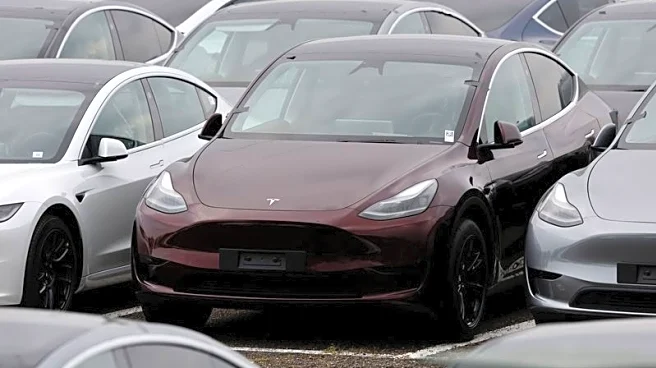
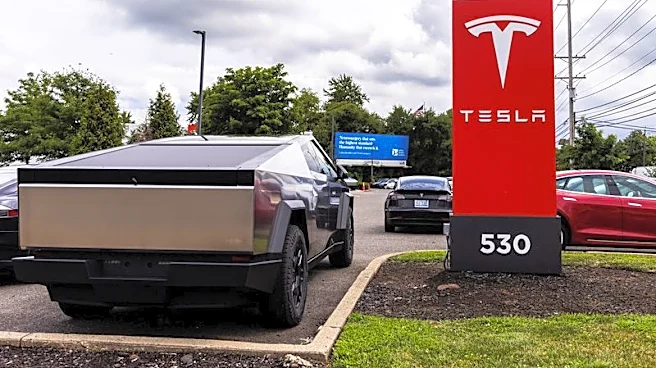
Musk's political stances. Despite the positive sales growth, the company faces an overproduction issue, having manufactured 408,386 vehicles, a 12.6% increase from the previous year, resulting in 50,000 unsold cars in inventory. The sales of Models 3 and Y rose by 5.6%, while sales of other models like the Cybertruck, Model S, and Model X fell by 19.7%. Additionally, Tesla's energy storage business saw a 15% decline in deployment compared to the same period last year.
Why It's Important?
The increase in Tesla's sales is significant as it indicates a potential recovery from the previous year's sales slump. However, the overproduction issue highlights challenges in aligning production with demand, which could impact inventory management and financial performance. The decline in energy storage deployment suggests potential hurdles in Tesla's diversification efforts beyond automotive sales. The company's stock, despite a 3% drop in early trading, remains up 30% from the previous year, reflecting investor confidence in Tesla's long-term prospects. The situation underscores the importance of strategic production planning and market adaptation for Tesla's sustained growth.
What's Next?
Tesla may need to address its overproduction problem by adjusting its manufacturing strategies or enhancing its sales and marketing efforts to reduce inventory. The company might also explore new markets or product lines to boost sales. Stakeholders, including investors and industry analysts, will likely monitor Tesla's next quarterly results to assess the effectiveness of any corrective measures. Additionally, the company may focus on expanding its energy storage business to offset the recent decline in deployment.