




What's Happening?
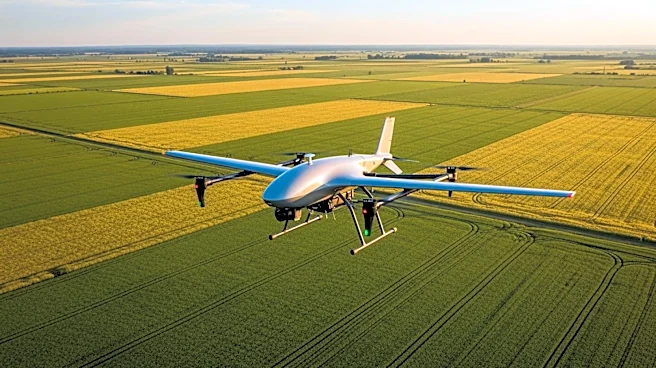
Drone technology is increasingly being integrated into agricultural practices across the United States, offering farmers new ways to enhance efficiency, reduce costs, and manage risks. According to research from Washington State University, drones are
being used for remote sensing, allowing farmers to monitor entire fields and individual plants from above. This capability aids in early detection of issues such as soil moisture imbalance, pest infestations, diseases, and crop stress, enabling timely interventions to prevent crop loss. Drones are also replacing traditional, costly, and risky methods such as using helicopters for rainwater removal in fruit orchards. Additionally, drones are being utilized for precision crop spraying, targeting only affected areas, which reduces chemical usage and environmental impact while saving money. Supported by a USDA-funded multistate research project, universities are testing various drone platforms and developing training materials to facilitate adoption by farmers.
Why It's Important?
The integration of drone technology into farming practices holds significant implications for the agricultural industry in the United States. By improving efficiency and reducing costs, drones can help farmers increase their profitability and sustainability. The ability to precisely target areas for pesticide application minimizes chemical use, which is beneficial for the environment and public health. Furthermore, drones offer safer alternatives to traditional methods, reducing the need for manned aircraft operations that can be dangerous and expensive. As drones become more reliable and easier to use, they are expected to play a crucial role in building resilient agricultural systems that can withstand challenges such as climate change and resource scarcity. This technological advancement could lead to increased food security and economic stability for farmers and the broader agricultural sector.
What's Next?
As research and development in drone technology continue, farmers can expect further enhancements in drone capabilities and applications. Universities involved in the USDA-supported project are working on improving drone reliability and ease of use, which will likely lead to wider adoption across the agricultural industry. Training materials being developed will help farmers integrate drones into their operations confidently. Future advancements may include more sophisticated sensors and software that can provide even more detailed data for decision-making. The ongoing exploration of drone applications in areas such as livestock management and water resource monitoring suggests that drones will become an integral part of modern farming practices, contributing to the development of more sustainable and productive agricultural systems.