







What's Happening?
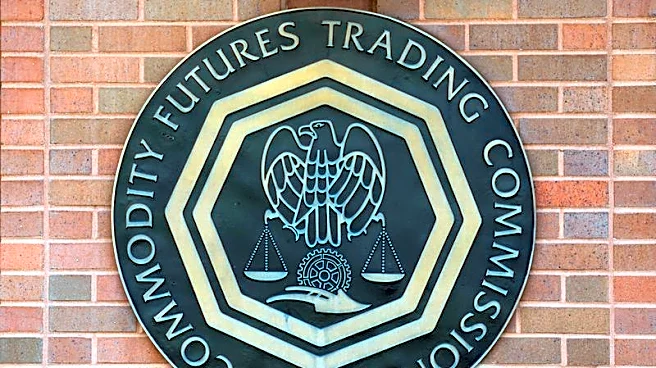
The Commodity Futures Trading Commission (CFTC) has introduced its first proposed rules to regulate prediction markets, focusing on banning trading related to terrorism, assassinations, and war. The proposal aims to establish a framework to determine
if certain contracts are contrary to public interest and illegal under the Commodity Exchange Act. While the CFTC did not outright ban all event contracts, it emphasized the need to scrutinize those related to sensitive topics. The proposed rules also address the grey area surrounding gaming contracts, particularly those related to sports, which have been controversial. The CFTC's proposal will undergo a 45-day public comment period, allowing stakeholders to provide feedback. CFTC Chairman Michael Selig, appointed by President Trump, stated that the commission seeks to balance market integrity with responsible innovation.
Why It's Important?
The proposed rules by the CFTC are significant as they aim to regulate the rapidly growing prediction markets, which have raised concerns about potential risks such as insider trading. By banning contracts related to terrorism and assassinations, the CFTC seeks to prevent markets from exploiting sensitive and potentially harmful events. The regulation of gaming contracts, especially those related to sports, is crucial as states have challenged these platforms, viewing them as betting. The CFTC's assertion of authority over all contracts as swaps highlights its role in maintaining market integrity. The proposal reflects a broader effort to ensure that prediction markets operate within legal and ethical boundaries, protecting public interest while allowing legitimate markets to thrive.
What's Next?
Following the announcement of the proposed rules, the CFTC will enter a 45-day public comment period, during which stakeholders can provide input on the regulations. This feedback will be crucial in shaping the final rules and addressing any concerns raised by industry participants and lawmakers. The CFTC may also engage in further rulemaking to refine its approach to regulating prediction markets. As the proposal progresses, it is likely to attract attention from bipartisan members of Congress, who have expressed concerns about the potential risks associated with these markets. The outcome of this regulatory process could set a precedent for how prediction markets are governed in the future.