







What's Happening?
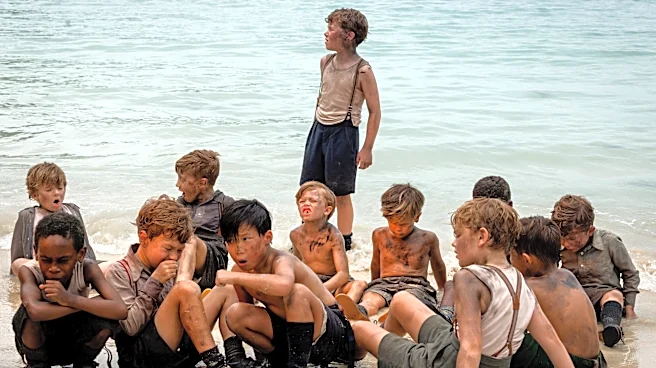
Jack Thorne has adapted William Golding's 1954 novel 'Lord of the Flies' into a miniseries for Netflix, premiering in the U.S. on May 4. The series remains largely faithful to the original story, which follows a group of British schoolboys stranded on a deserted
island during a wartime evacuation. Thorne's adaptation adds depth by providing backstories for the characters, particularly focusing on Jack, a choir singer who becomes a rebellious leader. The series explores the boys' descent into savagery and the breakdown of their mini-society. Thorne's version aims to offer multiple perspectives by dedicating each episode to a different character, allowing viewers to understand the complex dynamics and decisions that lead to the island's destruction.
Why It's Important?
This adaptation of 'Lord of the Flies' is significant as it revisits a classic novel with a fresh perspective, potentially reaching a new generation of viewers. By adding depth to the characters, the series invites audiences to engage in discussions about leadership, morality, and the nature of humanity. The themes of the story, such as the fragility of civilization and the darkness within human nature, remain relevant in today's society. The series also highlights the importance of understanding different viewpoints, which can lead to more nuanced conversations about societal issues.
What's Next?
As the series premieres on Netflix, it is likely to spark discussions among viewers and critics about its interpretation of the novel. The adaptation may also influence future adaptations of classic literature, encouraging creators to explore character backstories and multiple perspectives. Additionally, the series could inspire educational discussions in academic settings, examining the themes of the novel in the context of contemporary issues.