


What's Happening?
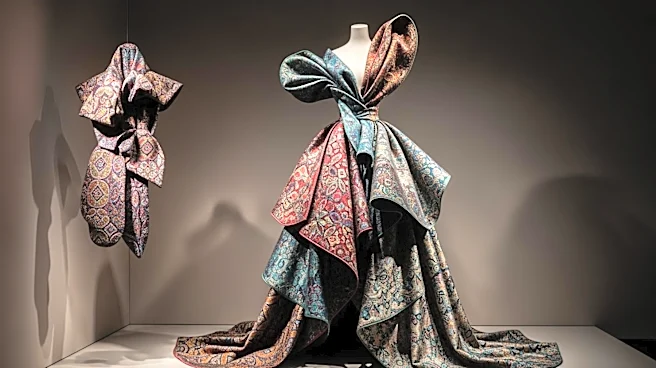
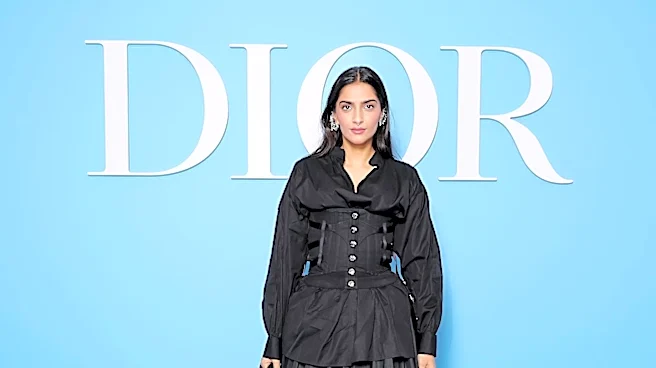
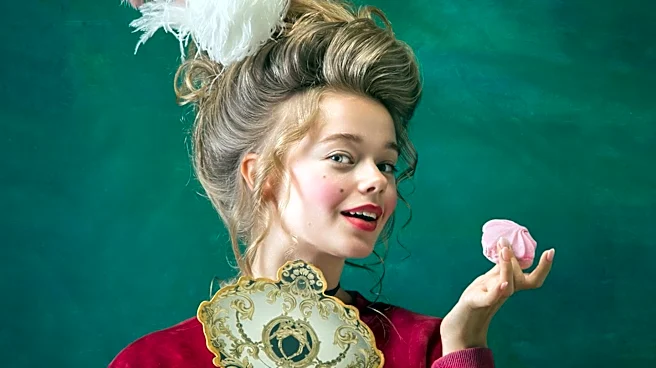
During Paris Fashion Week, the autumn/winter 2026/2027 collections showcased a revival of 18th-century fashion elements. Designers such as Cecilie Bahnsen, Dior, and Louis Vuitton are incorporating historical styles like corsets, crinolines, and floral
patterns into their collections. This trend is not merely a stylistic choice but a strategic response to current challenges in the luxury fashion sector. The collections aim to differentiate brands in a market saturated with minimalism and 'quiet luxury,' offering a visual impact that enhances brand value and desirability. Exhibitions at Palais Galliera and Musée des Arts Décoratifs further highlight the influence of 18th-century fashion, showcasing original garments and their modern reinterpretations.
Why It's Important?
The revival of 18th-century fashion elements is significant as it addresses the luxury sector's need for differentiation and cultural legitimacy. By reintroducing elaborate constructions and historical references, designers are enhancing the perceived value of their collections, making them harder to replicate and more desirable in a competitive market. This trend also reflects a shift towards clothing as a means of social distinction, responding to the rapid creation and obsolescence of trends accelerated by social media. The strategic use of historical styles supports premium strategies, offering brands a way to stand out and maintain relevance in the evolving fashion landscape.
What's Next?
As designers continue to explore historical references, the fashion industry may see a broader integration of past styles into contemporary wardrobes. This could lead to increased collaborations between fashion houses and cultural institutions, further enriching the narrative of luxury fashion. Brands might also focus on enhancing craftsmanship and technological integration to elevate their offerings. The trend could influence consumer preferences, encouraging a move away from minimalism towards more expressive and culturally rich fashion choices. Stakeholders in the fashion industry, including designers, retailers, and consumers, will likely engage in discussions about the balance between historical inspiration and modern innovation.
Beyond the Headlines
The revival of 18th-century fashion elements raises questions about the cultural and ethical implications of using historical styles in modern collections. It highlights the role of fashion as a cultural artifact, capable of conveying collective stories and affiliations. This trend may also spark debates about the sustainability of luxury fashion, as elaborate constructions often require significant resources. Additionally, the focus on historical styles could influence the global fashion narrative, with different markets interpreting these elements in unique ways. The trend underscores the importance of preserving cultural heritage while adapting it to contemporary contexts.