



What's Happening?
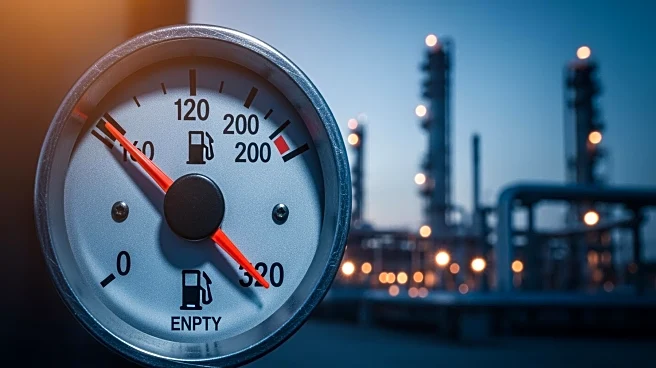
The ongoing conflict in the Middle East has led to significant disruptions in the global oil market, causing a sharp increase in fuel prices. The closure of the Strait of Hormuz and the rerouting of oil tankers around Africa have exacerbated the situation,
leading to a spike in Brent crude oil prices, which recently surpassed $94 a barrel. This has resulted in a global shortfall, particularly affecting diesel fuel, which relies heavily on crude oil from the Persian Gulf. The volatility in fuel prices is causing widespread economic concerns, with many consumers and businesses facing increased costs. The situation has prompted a rise in interest in electric vehicles (EVs) as consumers seek alternatives to traditional gasoline and diesel-powered vehicles.
Why It's Important?
The volatility in fuel prices has significant implications for the U.S. economy, affecting both consumers and businesses. Higher fuel costs lead to increased transportation and production expenses, which can result in higher prices for goods and services. This situation places a financial strain on households and businesses, potentially slowing economic growth. The increased interest in electric vehicles highlights a shift in consumer behavior as people seek more stable and predictable energy costs. However, the transition to EVs involves challenges, such as the need for infrastructure development and consumer education. The current situation underscores the vulnerability of the U.S. economy to global geopolitical events and the importance of diversifying energy sources.
What's Next?
As the conflict in the Middle East continues, the U.S. and other countries may need to explore alternative energy strategies to mitigate the impact of fuel price volatility. This could involve increasing investments in renewable energy sources and expanding the infrastructure for electric vehicles. Policymakers may also need to consider measures to stabilize fuel prices and support consumers and businesses affected by the current crisis. The situation may prompt further discussions on energy independence and the need to reduce reliance on foreign oil. In the short term, consumers and businesses will need to adapt to the fluctuating fuel prices and explore ways to manage their energy costs effectively.
Beyond the Headlines
The current fuel crisis highlights the broader issue of energy security and the need for sustainable energy solutions. The reliance on fossil fuels makes economies vulnerable to geopolitical tensions and market fluctuations. The shift towards electric vehicles and renewable energy sources presents an opportunity to reduce this vulnerability and promote environmental sustainability. However, this transition requires significant investment and policy support to overcome existing barriers. The situation also raises ethical considerations regarding the impact of energy policies on different segments of society, particularly those most affected by rising fuel costs.