







What's Happening?
Roberto Perli, a Federal Reserve Bank of New York official, has stated that the central bank's current rate control toolkit remains effective even if banks hold fewer reserves. This comes amid discussions about the future of the Federal Reserve's balance
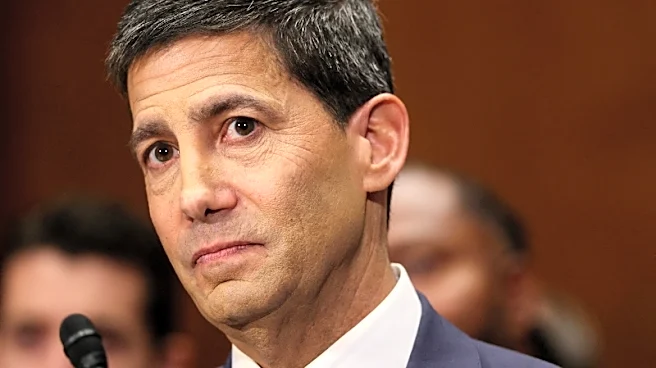
sheet, which expanded significantly during the COVID-19 pandemic. The balance sheet peaked at $9 trillion by mid-2022 and has since decreased to $6.7 trillion. Perli emphasized that the pace of Treasury bill purchases, which were initiated to rebuild liquidity, will be adjusted based on market conditions. The current purchase rate has been reduced from $40 billion to $10 billion per month. Incoming Federal Reserve Chair Kevin Warsh has criticized the Fed's large-scale asset purchases, arguing that they distort pricing and that the balance sheet should be smaller to allow for a lower short-term rate target.
Why It's Important?
The debate over the Federal Reserve's balance sheet and reserve management is crucial as it impacts the central bank's ability to control interest rates and maintain economic stability. A smaller balance sheet could potentially lead to lower interest rates, affecting borrowing costs for businesses and consumers. The discussion also touches on the Fed's independence and its role in managing economic policy. Changes in reserve requirements and liquidity rules could influence the financial system's stability and the Fed's ability to respond to economic challenges. Stakeholders, including financial institutions and policymakers, are closely monitoring these developments as they could have significant implications for monetary policy and economic growth.
What's Next?
As the Federal Reserve navigates these discussions, potential changes to bank regulatory liquidity requirements could lead to a shift in reserve demand. The central bank may need to adjust its balance sheet strategy to maintain effective interest rate control. The incoming Fed Chair, Kevin Warsh, may influence future policy directions, potentially advocating for a smaller balance sheet. Financial markets and institutions will be watching for any policy shifts that could affect liquidity and interest rates. The ongoing debate will likely continue to shape the Fed's approach to monetary policy and its interactions with the broader financial system.