
What's Happening?
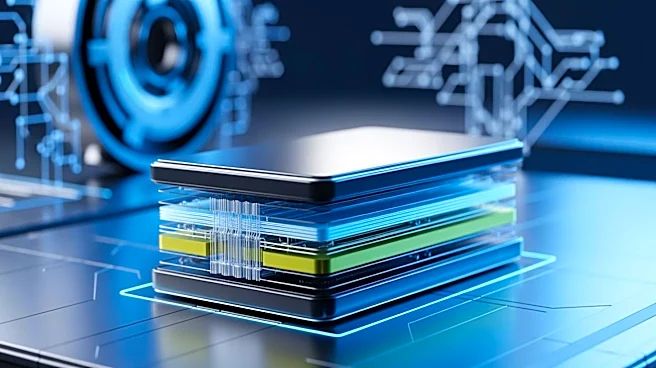
Recent developments in solid-state battery materials have focused on improving ion transport, interfacial stability, and scalable manufacturing. Solid-state batteries, which replace liquid electrolytes
with solid ion-conducting materials, offer potential advantages such as reduced thermal runaway risk and higher energy density. However, challenges remain in achieving consistent manufacturing quality and scalability. Advances in electrolyte design, such as the use of garnet-based and composite electrolytes, aim to enhance ionic conductivity and mechanical stability. Despite these advancements, the gap between laboratory performance and reliable, affordable production persists, highlighting the need for further research and development.
Why It's Important?
Solid-state batteries are seen as a promising next-generation energy storage technology, with potential applications in electrified transport and broader energy storage needs. Their development could lead to safer, more efficient battery systems with higher energy densities. However, the challenges in scalable manufacturing and interfacial stability must be addressed to realize these benefits. Successful commercialization of solid-state batteries could significantly impact the energy storage industry, driving innovation and potentially reducing reliance on traditional lithium-ion systems.