






What's Happening?
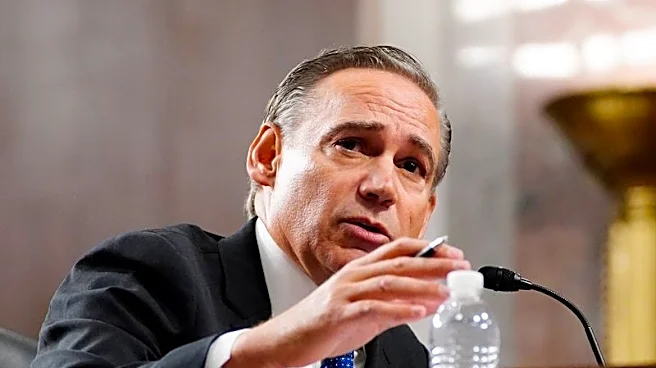
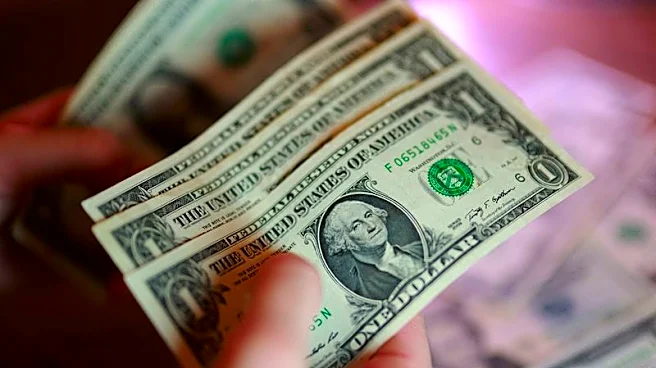
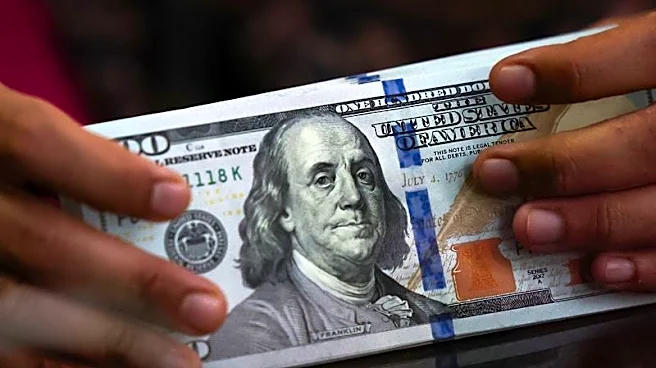
Kenneth Rogoff, a professor at Harvard University and former chief economist at the International Monetary Fund, has expressed concerns about the U.S. dollar's current valuation. He suggests that the dollar is overvalued and anticipates a potential decline
of 15-20%. Rogoff also highlights the possibility of the Chinese yuan emerging as a global reserve currency. Additionally, he foresees a resurgence in euro-denominated debt and describes the United States' fiscal policy as 'probably unsustainable.' These insights were shared during a discussion on the future of global currencies and economic policies.
Why It's Important?
The potential decline of the U.S. dollar could have significant implications for global trade and economic stability. A weaker dollar may affect U.S. exports, making them more competitive abroad, but it could also increase the cost of imports, impacting consumer prices. The rise of the Chinese yuan as a global reserve currency could shift economic power dynamics, influencing international trade agreements and financial markets. Furthermore, concerns about the sustainability of U.S. fiscal policy may prompt discussions on government spending and debt management, affecting economic policy decisions.
What's Next?
If the U.S. dollar continues to decline, it may prompt the Federal Reserve and policymakers to reassess monetary and fiscal strategies to stabilize the currency. The potential rise of the Chinese yuan as a global reserve currency could lead to increased geopolitical and economic negotiations between the U.S. and China. Additionally, the resurgence of euro-denominated debt might influence European financial markets and economic policies. Stakeholders, including investors and government officials, will likely monitor these developments closely to adapt to changing economic conditions.