



What's Happening?
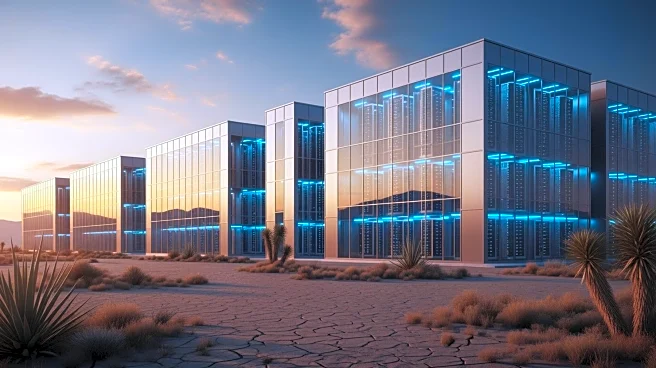
In El Centro, California, local developers and consultants have unveiled plans for a $10 billion investment to transform Imperial County into a hub for artificial intelligence. The proposed 'Imperial Data Center' aims to be the largest AI data center in California, potentially hosting one of the 'Big Four' tech giants: Amazon, Google, Meta, or Microsoft. The project promises significant economic benefits, including $72 million in sales tax revenue during construction and $18.75 million in annual property taxes once operational. The development also plans to use reclaimed wastewater and agree to 'interruptible service' to manage energy consumption. Despite its potential, the project faces opposition, including a lawsuit from the City of Imperial and concerns
from the Imperial Irrigation District.
Why It's Important?
The proposed data center represents a major economic opportunity for Imperial County, which has been seeking new economic drivers following the closure of the Spreckels sugar plant. The project could significantly boost the local economy by increasing the county's tax base and providing high-tech job opportunities. However, the opposition it faces highlights the challenges of balancing economic development with local concerns. If successful, the project could set a precedent for similar developments in California, potentially attracting more tech investments to the region. Conversely, failure to address local opposition could deter future investments, reinforcing a perception that California is a challenging environment for large-scale projects.
What's Next?
The developers are urging the local business community to support the project to counteract opposition. The outcome of the lawsuit filed by the City of Imperial will be crucial in determining the project's future. Additionally, the developers will need to address concerns from the Imperial Irrigation District and other stakeholders to move forward. The project's success or failure could influence future tech investments in California, as investors may look to other states like Arizona or Texas if regulatory hurdles persist.