







What's Happening?
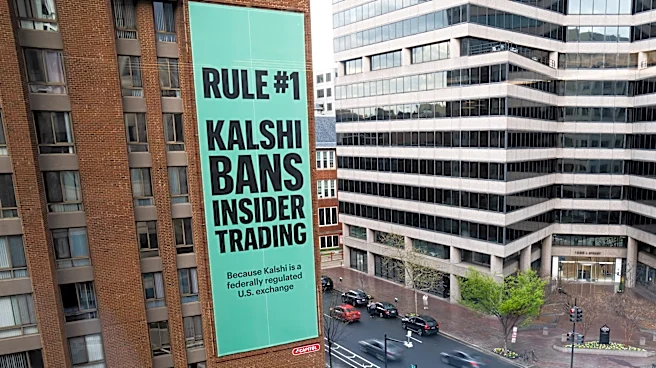
Recent enforcement actions against insider trading in prediction markets have not alleviated concerns among U.S. lawmakers. Kalshi, a prediction market platform, fined and suspended three congressional candidates for betting on their own elections. Additionally,
the Department of Justice indicted a U.S. Army soldier for using classified information to profit from trades related to Venezuelan President Nicolás Maduro. Despite these actions, critics like Democratic Sen. Chris Murphy argue that prediction markets serve no legitimate purpose and equate them to gambling. Proponents, however, claim these markets provide valuable services such as financial hedging and crowd-sourced forecasting. In response to insider trading concerns, Kalshi and Polymarket have implemented stricter market integrity rules and partnered with companies like Palantir to monitor suspicious activities. The Senate has also passed a resolution banning senators and their staff from trading on prediction markets.
Why It's Important?
The debate over prediction markets highlights broader concerns about the intersection of finance, politics, and ethics. Critics argue that these markets could undermine public trust by allowing individuals with insider knowledge to profit unfairly. The controversy also raises questions about the regulation of financial markets and the definition of gambling versus trading. The actions taken by platforms like Kalshi and Polymarket to address insider trading reflect an industry under pressure to maintain legitimacy and transparency. The outcome of this debate could influence future regulatory approaches to similar financial innovations and impact how markets operate within the U.S. economy.
What's Next?
The future of prediction markets in the U.S. remains uncertain as lawmakers continue to scrutinize their operations. A bill co-authored by Sen. Murphy and Democratic Rep. Greg Casar aims to ban various types of prediction markets, including those related to entertainment events. Meanwhile, platforms like Polymarket are navigating legal challenges regarding their classification as gambling entities. The ongoing legal and political battles will likely shape the regulatory landscape for prediction markets and determine their viability as financial instruments. Stakeholders, including lawmakers, market operators, and users, will need to engage in dialogue to address ethical and legal concerns.