







What's Happening?
The Food and Drug Administration (FDA) has approved bemotrizinol, a sunscreen ingredient that has been popular in Europe and Asia for decades. This decision comes after a lengthy approval process, as bemotrizinol is regulated as an over-the-counter drug
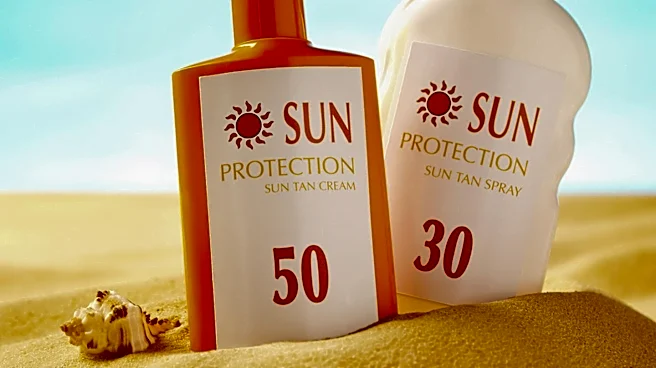
in the U.S., requiring extensive testing. The approval is expected to enhance consumer confidence in sunscreen products, which has been waning due to concerns over existing ingredients. Bemotrizinol is known for its ability to block a broad spectrum of ultraviolet rays while being lighter on the skin compared to many American sunscreens. The approval will allow companies to reformulate sunscreens, potentially increasing their appeal to consumers. The ingredient is also expected to facilitate the entry of popular South Korean sunscreen brands into the U.S. market by autumn.
Why It's Important?
The approval of bemotrizinol is significant as it addresses growing consumer concerns about the safety and effectiveness of sunscreen ingredients. In the U.S., sunscreen chemicals are subject to rigorous testing, and bemotrizinol's inclusion in the FDA's 'generally recognized as safe and effective' (GRASE) list could help rebuild trust in sunscreen products. This is crucial as skin cancer remains the most common cancer in the U.S., with millions diagnosed annually. The approval also highlights the FDA's role in ensuring product safety and could lead to increased competition in the sunscreen market, potentially driving innovation and better consumer options. Additionally, the move may influence public health strategies, encouraging more people to use sunscreen as part of their sun protection regimen.
What's Next?
With the FDA's approval, sunscreen manufacturers are expected to begin reformulating their products to include bemotrizinol, aiming to offer more effective and consumer-friendly options. This could lead to a shift in the market, with new products potentially available by the end of the year. The approval may also prompt further scrutiny and potential regulation of other sunscreen ingredients that lack GRASE status. As companies adapt to these changes, consumer education on the benefits of using approved sunscreen ingredients will be crucial. The FDA's decision may also encourage other countries to reevaluate their sunscreen ingredient regulations, potentially leading to more global harmonization in sunscreen safety standards.