

What's Happening?
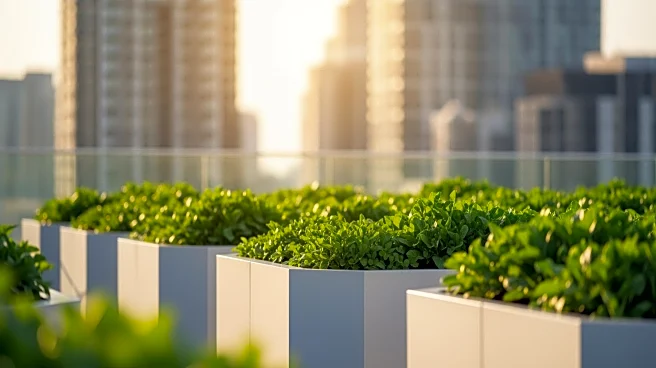
The global urban farming market is projected to grow from USD 172.62 billion in 2024 to USD 311.24 billion by 2032, with a steady compound annual growth rate (CAGR) of 7.6%. This growth is driven by rapid urbanization, increasing demand for fresh, locally grown produce, and concerns about food security and supply chain sustainability. Technological advancements in vertical farming, hydroponics, aquaponics, and controlled-environment agriculture are also contributing to market expansion. North America leads the market with a 34.2% share, supported by advanced infrastructure and government initiatives. Key developments include AeroFarms' expansion in Newark, New Jersey, and Plenty's commercial urban farm in Los Angeles.
Why It's Important?
The expansion of urban farming
is significant as it addresses the challenges of food security and sustainability in rapidly urbanizing areas. By reducing transportation costs and ensuring the freshness of produce, urban farming supports local economies and reduces carbon footprints. The integration of advanced technologies like AI-optimized LED lighting and robotic harvesting systems enhances productivity and resource efficiency. This growth also aligns with consumer preferences for eco-friendly practices and government policies promoting urban agriculture. As urban populations continue to rise, the demand for innovative farming solutions will likely increase, making urban farming a critical component of future food systems.