





What's Happening?
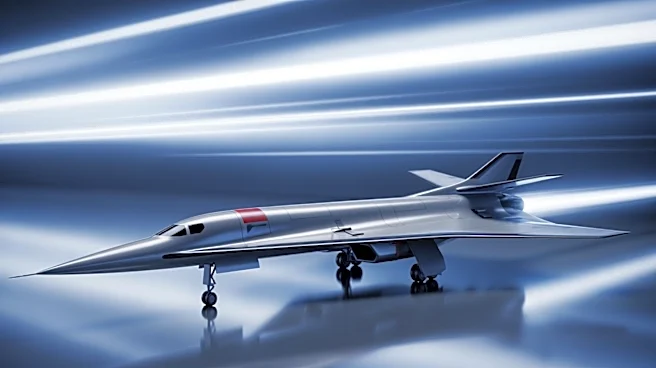
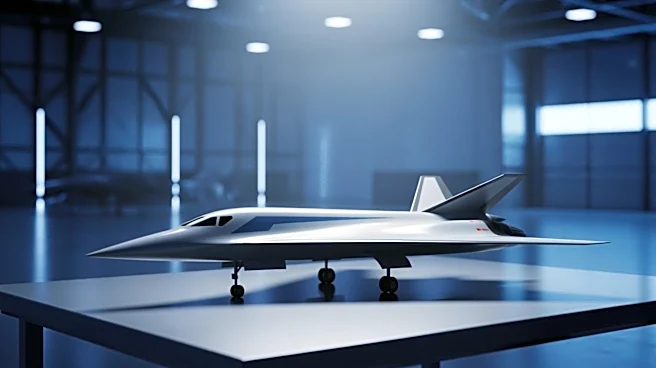
Hermeus, a hypersonic aviation start-up, has received approval from the U.S. Federal Aviation Administration (FAA) to conduct non-military supersonic flights with its experimental Quarterhorse Mk 2.1 vehicle. This approval allows Hermeus to perform test
flights at speeds exceeding Mach 1, marking a significant step towards achieving hypersonic flight capabilities. The Quarterhorse Mk 2.1, powered by a Pratt & Whitney F100 fighter jet engine, logged its first subsonic flight in March at the Spaceport America test facility in New Mexico. Hermeus plans to use this vehicle to validate its aircraft design and autonomous flight control systems at high speeds, with the ultimate goal of developing a reusable flight vehicle capable of breaking the M5 hypersonic barrier.
Why It's Important?
The FAA's approval is crucial for Hermeus as it advances its mission to develop hypersonic flight technology, which has significant implications for both commercial and military aviation. Achieving hypersonic speeds could revolutionize air travel, drastically reducing flight times and enhancing global connectivity. For the U.S., maintaining leadership in hypersonic technology is vital for national security and competitiveness in aerospace innovation. Hermeus' progress also highlights the growing interest and investment in hypersonic capabilities, which could lead to new opportunities in defense and commercial sectors.
What's Next?
Hermeus plans to conduct up to seven supersonic test flights by the end of 2026, further pushing the boundaries of its technology. The company is also developing the Quarterhorse Mk 3, which aims to achieve hypersonic flight with a dual-mode ramjet engine. As Hermeus continues its research and development, it may attract additional funding and partnerships, potentially accelerating the timeline for operational hypersonic capabilities. The move of Hermeus' headquarters to Los Angeles indicates a strategic focus on expanding its operations and production capabilities.