
What's Happening?
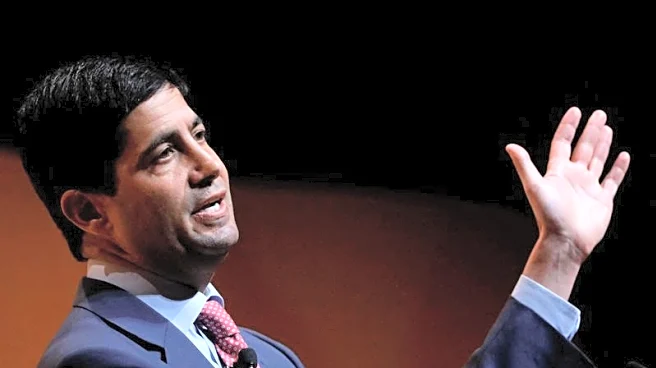
The U.S. dollar has maintained its strength as investors consider the potential impact of Kevin Warsh's leadership at the Federal Reserve. Warsh, nominated by President Trump, is expected to favor a smaller
Fed balance sheet, which typically supports the dollar by reducing money supply. The nomination has led to selling across risky assets and a decline in precious metals. Investors anticipate that Warsh may implement rate cuts, with PIMCO's Richard Clarida suggesting two or three cuts this year. The dollar index has steadied, reflecting investor confidence in Warsh's potential policy direction.
Why It's Important?
The potential changes in Federal Reserve policy under Kevin Warsh could have significant implications for the U.S. economy and global financial markets. A stronger dollar can affect international trade by making U.S. exports more expensive and imports cheaper, impacting domestic industries. Warsh's approach to the Fed's balance sheet and interest rates will influence inflation and economic growth, affecting businesses, consumers, and investors. The anticipation of rate cuts and balance sheet adjustments highlights the market's focus on monetary policy as a key driver of economic conditions.
What's Next?
Investors will closely watch Warsh's confirmation process and subsequent policy decisions at the Federal Reserve. The potential rate cuts and balance sheet management will be critical in shaping economic conditions and market dynamics. Stakeholders, including businesses and financial markets, will assess the impact of these changes on investment strategies and economic forecasts. The global currency market will also react to shifts in U.S. monetary policy, influencing exchange rates and international trade.
Beyond the Headlines
Warsh's nomination underscores the broader debate on the role of the Federal Reserve in managing economic challenges and the balance between monetary policy and political influence. His views on reducing the Fed's balance sheet and the impact of artificial intelligence on inflation suggest a shift in traditional policy approaches. These developments could lead to long-term changes in how the Fed addresses economic stability and growth, with implications for global financial systems.