



What's Happening?
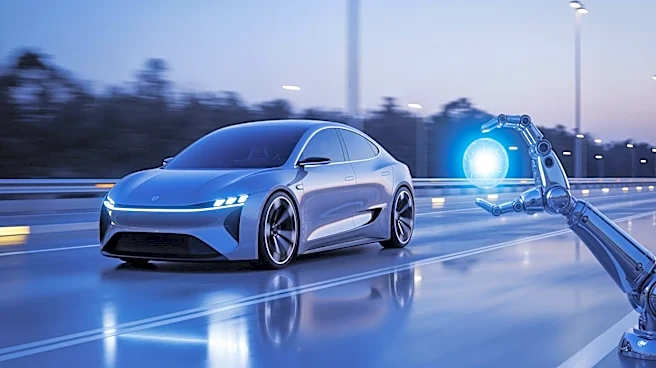
Michael Saylor, co-founder of Strategy Inc, has expressed his enthusiasm for self-driving cars and robotics, describing them as 'perfect products' in a recent social media post. Saylor, known for his advocacy of Bitcoin, highlighted three ideal products:
a car that drives itself, a robot that serves, and an asset that generates income. This statement aligns with the growing interest in autonomous vehicles and robotics, particularly as companies like Waymo continue to expand their self-driving technology across various cities globally. Saylor's comments reflect a broader trend in the tech industry towards automation and AI-driven solutions.
Why It's Important?
Saylor's endorsement of self-driving cars and robotics underscores a significant shift in technological innovation and consumer expectations. The development and adoption of autonomous vehicles could revolutionize transportation, reducing the need for human drivers and potentially decreasing traffic accidents. Similarly, robotics could transform industries by automating tasks, increasing efficiency, and reducing labor costs. These advancements could have profound implications for the U.S. economy, affecting sectors such as manufacturing, logistics, and transportation. Companies investing in these technologies may gain a competitive edge, while traditional industries might face challenges adapting to these changes.
What's Next?
As companies like Waymo continue to test and deploy self-driving technology, regulatory frameworks will need to evolve to address safety and ethical concerns. The expansion of robotics in various sectors will likely prompt discussions on workforce displacement and the need for new skill sets. Policymakers and industry leaders will need to collaborate to ensure that these technologies are integrated safely and equitably. The ongoing development of AI and robotics will also require continuous investment in research and infrastructure to support these innovations.