



What's Happening?
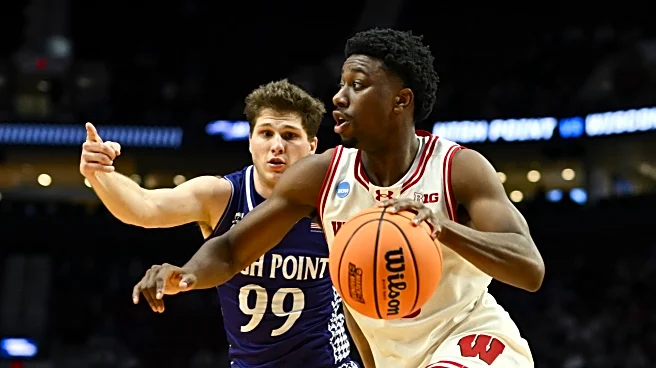
The NCAA Tournament has brought attention to the challenges faced by mid-major basketball teams in securing games against major opponents. High Point's victory over Wisconsin highlighted the issue, as coach Flynn Clayman noted the difficulty in scheduling
games with top-tier teams. This sentiment is echoed by other mid-major coaches who struggle to prove their teams' worth due to limited opportunities against high-profile opponents. The success of teams like Miami (Ohio) and High Point in the tournament underscores the potential of mid-majors, yet their regular-season schedules often lack games against top competition, affecting their NCAA Tournament resumes.
Why It's Important?
The scheduling challenges faced by mid-major teams have significant implications for college basketball. These teams often have impressive records but struggle to gain recognition due to the lack of games against high-profile opponents. This affects their seeding and perception in the NCAA Tournament. The issue also highlights the broader inequities in college sports, where financial and administrative support can heavily influence a team's ability to compete at the highest levels. Addressing these scheduling disparities could lead to a more competitive and inclusive college basketball landscape, benefiting both mid-major programs and the sport as a whole.
What's Next?
While there is no immediate indication of changes to the scheduling system, the continued success of mid-major teams in the NCAA Tournament may prompt discussions among stakeholders. Coaches and athletic directors from both mid-major and major programs could advocate for a more equitable scheduling system that allows for more competitive matchups. This could involve revising the criteria for NCAA Tournament selection to better account for the challenges faced by mid-majors. Additionally, increased media attention and public support for these teams may pressure governing bodies to consider reforms.