



What's Happening?
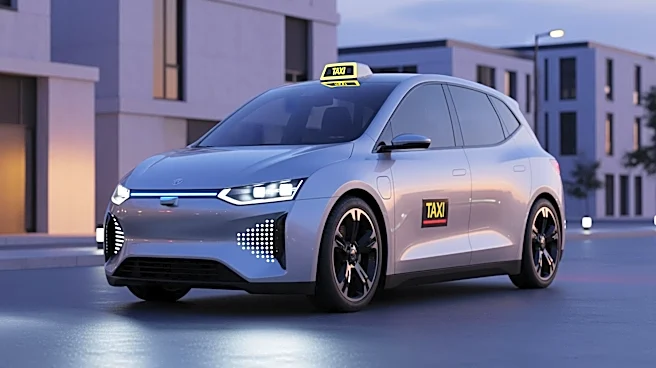
Tesla has launched a limited version of its driverless taxi service in Austin, Texas. The service, which began this week, involves 10 to 20 vehicles operating within a geofenced area of the city. Each vehicle is equipped with a safety monitor and other
precautions, such as remote teleoperators and restrictions on operating hours. The service is priced at a flat rate of $4.20 per ride. Despite the launch being celebrated by Tesla CEO Elon Musk, some analysts have expressed skepticism about the technology's readiness for widespread adoption. Videos posted online have shown some operational mishaps, such as a vehicle driving on the wrong side of the road momentarily. The National Highway Traffic Safety Administration has contacted Tesla following these incidents. Analysts have noted that while the launch is a step forward, it highlights that Tesla's self-driving technology is still in its early stages.
Why It's Important?
The launch of Tesla's robotaxi service is significant as it represents a major step in the commercialization of autonomous vehicle technology. If successful, it could revolutionize urban transportation by reducing the need for human drivers and potentially lowering costs for consumers. However, the technology's readiness and safety are under scrutiny, with past delays and incidents raising questions about its viability. The outcome of Tesla's efforts could impact the broader autonomous vehicle industry, influencing regulatory approaches and public acceptance. The service's success or failure could also affect Tesla's market position and financial performance, as the company has invested heavily in developing this technology.
What's Next?
Tesla plans to expand its robotaxi service, with CEO Elon Musk promising millions of robotaxis by next year. However, experts are skeptical about this timeline, with some predicting that a significant scale-up may not occur until 2028. The company will need to address safety concerns and regulatory requirements to achieve broader adoption. The National Highway Traffic Safety Administration's involvement suggests that regulatory scrutiny will continue, potentially influencing the pace and scope of Tesla's expansion plans. The company's ability to navigate these challenges will be crucial in determining the future of its autonomous vehicle ambitions.