







What's Happening?
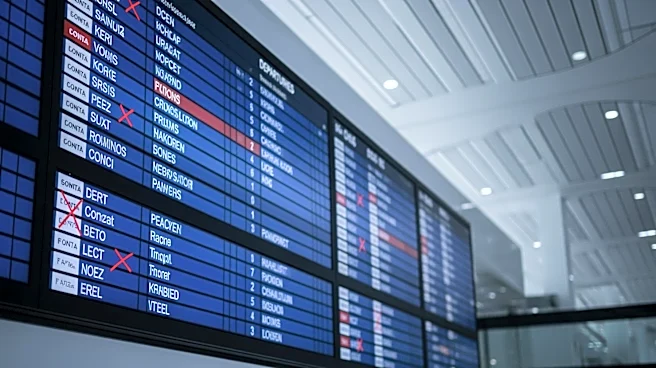
Delta Air Lines is experiencing significant operational disruptions, having canceled approximately 500 flights since Friday due to crew scheduling challenges. This is a stark contrast to American Airlines and United Airlines, which have canceled a combined
total of 80 flights. The cancellations are attributed to a sharp decline in pilots accepting extra flights beyond their regular schedules, with acceptance rates plummeting from 37% to just 2% year over year. Delta's internal memo highlights the increased reliance on a complex staffing system, 23.M.7, which was not intended for daily operations and is now being used extensively. The airline is currently renegotiating its union contract, which impacts the use of this scheduling system.
Why It's Important?
The operational challenges faced by Delta Air Lines have significant implications for the airline industry and its customers. The high rate of cancellations disrupts travel plans and could lead to financial losses for the airline due to compensation claims and potential damage to its reputation. The situation underscores the importance of effective crew management and scheduling systems in maintaining operational reliability. As Delta works to resolve these issues, it highlights the broader challenges airlines face in balancing staffing needs with operational demands, especially in a post-pandemic environment where travel demand is rebounding.
What's Next?
Delta is taking steps to address the current challenges by increasing pilot reserve levels and accelerating pilot hiring. The airline has already increased its pilot workforce by 20% compared to 2019. As negotiations with the union continue, Delta aims to improve its scheduling practices to prevent future disruptions. The outcome of these negotiations and the effectiveness of Delta's measures will be closely watched by industry stakeholders and could influence labor relations and operational strategies across the airline industry.