
What's Happening?
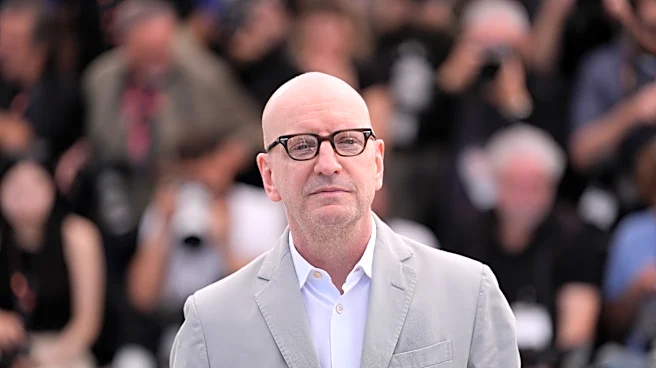
At the Cannes Film Festival, actor and filmmaker Seth Rogen expressed strong opinions against the use of artificial intelligence in scriptwriting. During an interview, Rogen stated that individuals who
rely on AI to write scripts should reconsider their career choice, as they are not truly engaging in the writing process. He emphasized the importance of human creativity and the personal touch in storytelling, particularly in filmmaking. Rogen is at Cannes to promote his new animated film 'Tangles,' which is entirely hand-drawn, underscoring his commitment to traditional methods. The film, which deals with themes of Alzheimer's, is a personal project for Rogen and his wife, producer Miller Rogen, who connected deeply with the story due to her own family experiences.
Why It's Important?
Rogen's comments highlight a growing debate in the entertainment industry about the role of AI in creative processes. As AI technology becomes more prevalent, there is concern about its impact on traditional creative roles and the authenticity of art. Rogen's stance underscores a broader resistance among some artists to the encroachment of AI, advocating for the preservation of human-driven creativity. This debate is significant as it touches on the future of creative industries, the value of human input, and the potential for AI to disrupt established artistic practices. The discussion also raises questions about the ethical implications of AI in art and the potential loss of jobs for writers and creators.
What's Next?
The conversation around AI in creative fields is likely to continue, with industry stakeholders, including filmmakers, writers, and producers, weighing in on the implications. As AI technology advances, there may be calls for clearer guidelines and ethical standards regarding its use in the arts. The industry might see a push for more projects that emphasize human creativity, as a counterbalance to AI-generated content. Additionally, educational institutions and professional organizations may need to adapt their training and support for artists to navigate this evolving landscape.