









What's Happening?
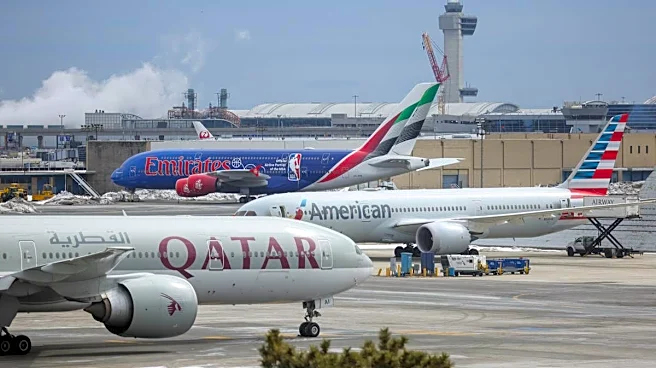
Airlines have increased airfares by approximately 20% in response to rising fuel prices, yet travel demand remains robust. Executives from major airlines, including United and WestJet, have expressed surprise at the continued strong demand despite higher
costs. This trend is observed across North America and Europe, where airlines are also investing in premium cabins and expanding in key markets. The resilience in demand suggests that consumers are willing to absorb higher travel costs, defying expectations of reduced travel activity.
Why It's Important?
The unexpected strength in travel demand despite rising airfares highlights the resilience of the travel industry and consumer willingness to prioritize travel. This trend has significant implications for airline revenue and profitability, as higher fares can offset increased operational costs. It also suggests a potential shift in consumer behavior, where travel is seen as a non-negotiable expense. The situation underscores the importance of strategic pricing and capacity management for airlines navigating volatile fuel markets.
What's Next?
Airlines are likely to continue monitoring demand trends closely and adjust their pricing and capacity strategies accordingly. The industry may also see increased investment in fuel-efficient technologies and alternative energy sources to mitigate the impact of fuel price volatility. As the situation evolves, airlines will need to balance cost management with maintaining competitive service offerings to attract and retain customers.