




What's Happening?
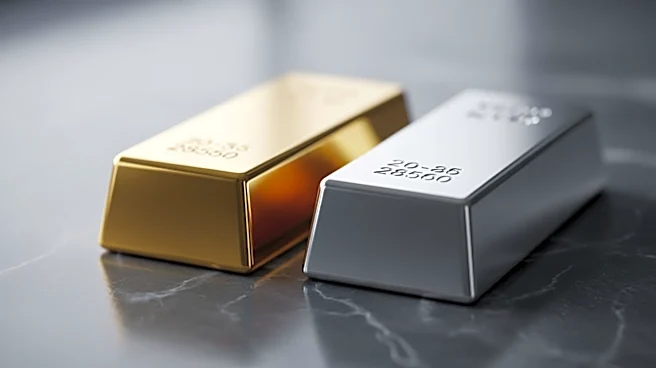
Gold and silver prices have experienced a significant decline, attributed to technical selling in the markets. This downturn is part of a broader trend influenced by various economic factors, including the Federal Reserve's monetary policy and fluctuations
in U.S. Treasury yields. The U.S. dollar index and Nymex WTI crude oil prices also play a role in shaping the current market dynamics. Jim Wyckoff, a seasoned market analyst, provides insights into these developments through his analytical and advisory services. His expertise spans over 25 years in the stock, financial, and commodity markets, offering a comprehensive view of the factors driving these price changes.
Why It's Important?
The decline in gold and silver prices has significant implications for investors and the broader economy. Precious metals are often seen as a hedge against inflation and economic uncertainty. Therefore, their price movements can reflect broader economic sentiments. The current decline may indicate investor confidence in other asset classes or a response to anticipated changes in monetary policy by the Federal Reserve. This shift can affect investment strategies, impacting portfolios that rely on precious metals for stability. Additionally, industries reliant on these metals for production may experience cost fluctuations, influencing pricing and supply chain decisions.
What's Next?
Market participants will closely monitor upcoming Federal Reserve meetings and economic indicators that could influence future price movements. Any changes in interest rates or monetary policy could further impact gold and silver prices. Investors may adjust their strategies based on these developments, potentially leading to increased volatility in the markets. Analysts like Jim Wyckoff will continue to provide insights and forecasts, helping stakeholders navigate these complex dynamics. The interplay between economic policies and market reactions will remain a focal point for traders and investors alike.