

What's Happening?
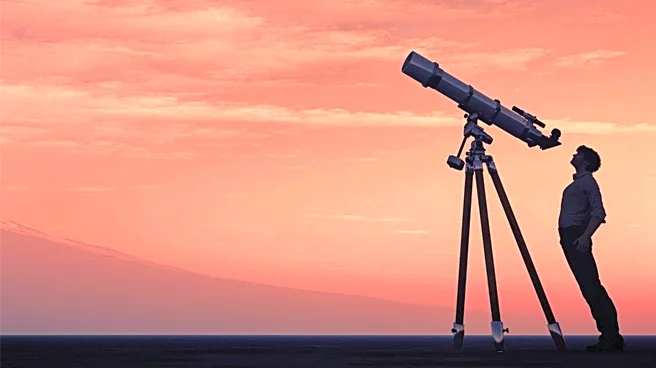
Astronomy enthusiasts are preparing for the annual Messier marathon night, an event that challenges observers to view all the objects in Charles Messier's catalog in a single night. This year, the marathon is set for March 21, 2026, and offers a unique
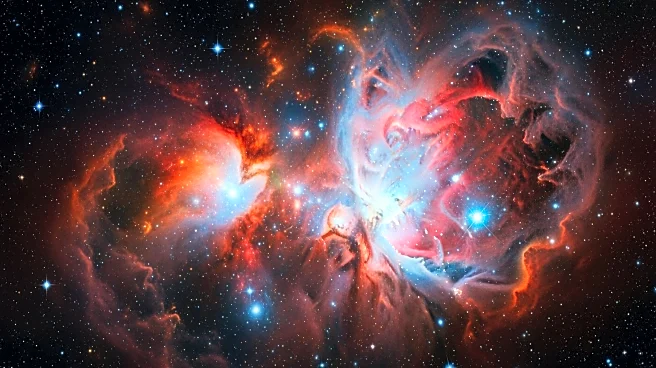
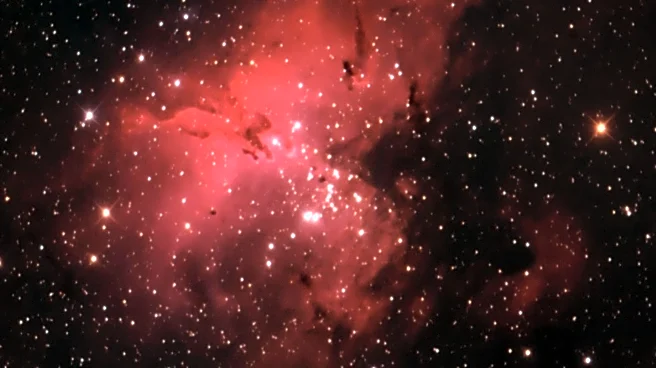
opportunity for both seasoned and novice stargazers to observe deep-sky objects. The event is particularly significant for those located between 7 and 35 degrees north latitude, where the full catalog of 109 objects can be attempted. The Orion Nebula, cataloged as M42, is one of the highlights of the night, visible above the southwestern horizon. This star-forming nebula is a favorite among astronomers due to its brightness and intricate structure, making it a must-see for participants.
Why It's Important?
The Messier marathon night is a significant event for the astronomy community, providing an opportunity for both education and engagement. It encourages amateur astronomers to deepen their understanding of the night sky and fosters a sense of community among participants. The event also highlights the importance of preserving dark skies, as light pollution can hinder the ability to observe these celestial objects. By participating in the marathon, individuals contribute to a broader appreciation of astronomy and the natural world, potentially inspiring future generations of astronomers.
What's Next?
As the Messier marathon night approaches, participants are likely to prepare their equipment and plan their observing strategies. Astronomy clubs and societies may organize group events to facilitate shared experiences and knowledge exchange. Following the marathon, participants may share their observations and experiences through online forums and social media, contributing to a collective understanding of the event's success and challenges. The event may also prompt discussions on the impact of light pollution and the importance of dark sky preservation.
Beyond the Headlines
The Messier marathon night underscores the cultural and educational value of astronomy. It serves as a reminder of humanity's long-standing fascination with the stars and the ongoing quest to explore the universe. The event also highlights the role of amateur astronomers in contributing to scientific knowledge, as their observations can complement professional research. Additionally, the marathon fosters a sense of wonder and curiosity, encouraging individuals to look beyond their immediate surroundings and consider their place in the cosmos.