
What's Happening?
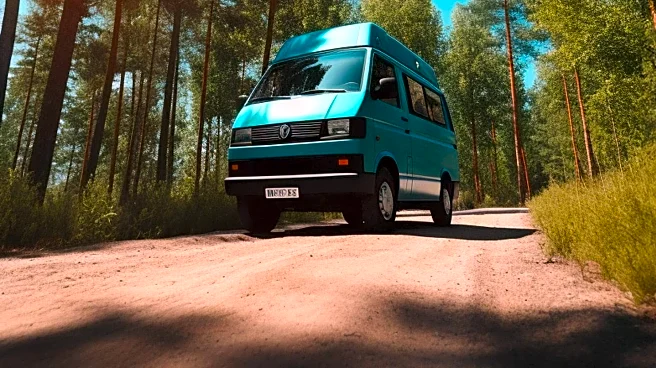
The founders of Tiny Planet, a California-based off-road van conversion company, have successfully completed a full circumnavigation of the globe in a self-contained camper van. The journey, which spanned
approximately 25,000 miles across North America, Europe, and Asia, took six months to complete. The expedition began in Ventura, California, and concluded with the family returning to the United States by air, while their van, Orbita, completed its final leg by sea from China. The van was custom-built to support long-term autonomous travel, featuring advanced off-grid technologies such as solar power, a high-capacity lithium battery system, and hydronic heated floors. Throughout the journey, the family lived full-time in the van, which served as their home across diverse environments, from the summer heat of Southern Europe to the Siberian winter.
Why It's Important?
This expedition serves as a significant proof of concept for Tiny Planet's approach to building luxury expedition vehicles designed for sustained, autonomous living. The successful circumnavigation highlights the potential for such vehicles to provide stable and comfortable living conditions in a variety of challenging environments. This could have implications for the future of travel and tourism, particularly in promoting sustainable and off-grid living solutions. The journey also underscores the importance of redundancy and thoughtful engineering in vehicle design, which can ensure resilience and reliability in extreme conditions. As interest in autonomous and sustainable travel grows, Tiny Planet's achievement may inspire further innovation and investment in this niche market.
What's Next?
Following the successful completion of this journey, Tiny Planet may look to leverage the experience and data gathered to refine and enhance their vehicle designs. The company could potentially expand its market reach by showcasing the capabilities of their vehicles to a broader audience interested in autonomous travel. Additionally, there may be opportunities for collaboration with other companies in the travel and tourism industry to develop new products and services that cater to the growing demand for sustainable and off-grid travel solutions. The success of this expedition could also lead to increased interest from consumers and investors, driving further growth and innovation in the sector.
Beyond the Headlines
The journey undertaken by Tiny Planet not only demonstrates the technical capabilities of their vehicles but also highlights the cultural and lifestyle shifts towards more sustainable and autonomous living. As more people seek alternatives to traditional travel and housing, the concept of living and traveling in self-contained, off-grid vehicles may gain popularity. This could lead to changes in how people perceive mobility and home, potentially influencing urban planning and infrastructure development. Furthermore, the expedition showcases the potential for families to embrace a nomadic lifestyle, providing children with unique educational and cultural experiences that traditional living arrangements may not offer.