





What's Happening?
A significant shift in global oil trade is occurring as Asian buyers increasingly turn to U.S. crude oil to compensate for the drastic reduction in supply from the Middle East. The disruption is primarily due to the inability of Middle Eastern oil producers
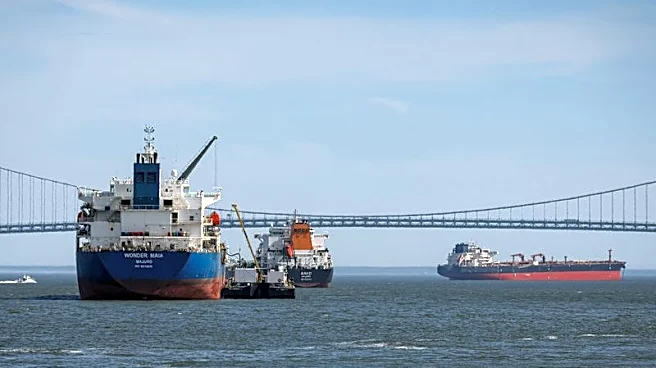
to ship crude through the Strait of Hormuz, a critical chokepoint for global oil transportation. Saudi Arabia, one of the major suppliers, has attempted to mitigate the impact by increasing exports via the Yanbu port on the Red Sea. However, this has not been sufficient to offset the losses. Consequently, a large number of supertankers are now en route from Asia to the U.S. to load crude oil, marking one of the largest queues of vessels ever seen. This shift is part of a broader global energy realignment, with North American crude replacing Middle Eastern oil in both Asia and Europe.
Why It's Important?
The redirection of oil trade routes has significant implications for global energy markets and geopolitical dynamics. For the U.S., this surge in demand for its crude oil could bolster the domestic oil industry, potentially leading to increased production and economic benefits. However, it also underscores the vulnerabilities in global supply chains and the heavy reliance on specific geographic regions for energy resources. For Asian countries, securing a stable oil supply is crucial for their economic stability and growth. The shift also highlights the strategic importance of diversifying energy sources to mitigate risks associated with geopolitical tensions in the Middle East.
What's Next?
As the situation develops, it is likely that the U.S. will continue to play a more prominent role in global oil supply, potentially leading to increased investments in infrastructure to support higher export volumes. Additionally, countries in Asia and Europe may seek to establish more permanent arrangements with North American suppliers to ensure energy security. The ongoing tensions in the Middle East could further exacerbate supply disruptions, prompting more countries to reassess their energy strategies and dependencies.