





What's Happening?
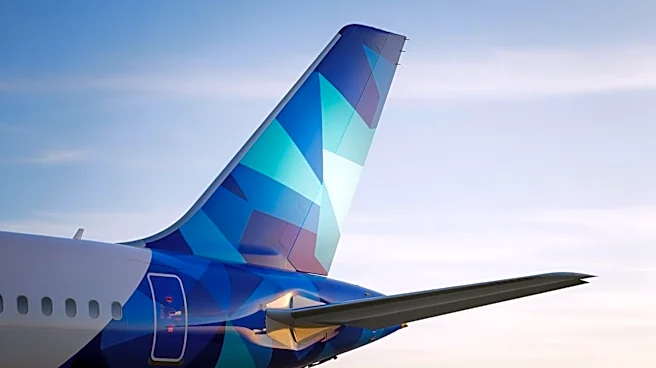
JetBlue has introduced 'Blueprint II,' a new livery design on its Airbus A220 aircraft, marking a continuation of its tradition of using aircraft design to reflect its brand identity. The 'Blueprint II' livery is a reimagined version of the original 'Blueprint'
design, which was first introduced in 2017 on the Embraer E190. This design became popular for its 'see-through' aesthetic, blending illustrations of travel items with the aircraft's mechanical structure. The updated livery on the A220 includes new icons that celebrate JetBlue's network and spirit of exploration, such as a crown for its first European destination, London, and a teddy bear in a passenger seat. The design also features hidden 'Easter eggs' for customers to discover. This move follows JetBlue's transition to an all-Airbus fleet, completed with the retirement of its Embraer E190 fleet in September 2025.
Why It's Important?
The introduction of 'Blueprint II' is significant as it underscores JetBlue's commitment to maintaining a strong brand identity through innovative design. By updating a beloved livery, JetBlue not only honors its past but also enhances customer engagement and brand loyalty. The move to an all-Airbus fleet, including the A220 and A320, positions JetBlue to improve operational efficiency and reduce maintenance costs. This strategic fleet transition is crucial for JetBlue as it competes in a highly competitive airline industry, where brand differentiation and customer experience are key to gaining market share. The new livery also reflects JetBlue's broader strategy to expand its network, including international destinations, thereby increasing its appeal to a wider customer base.
What's Next?
JetBlue is likely to continue leveraging its aircraft design as a tool for brand differentiation. The airline may introduce more special liveries in the future, each reflecting different aspects of its network and customer experience. As JetBlue expands its international routes, particularly in Europe, the airline may focus on enhancing its brand presence in these new markets. Additionally, the transition to an all-Airbus fleet could lead to further operational changes aimed at improving efficiency and customer satisfaction. Stakeholders, including customers and aviation enthusiasts, will be watching closely to see how these changes impact JetBlue's market position and service offerings.