



What's Happening?
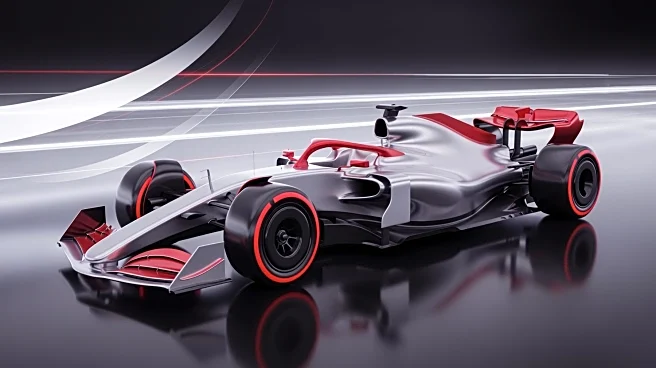
Haas has become the first Formula 1 team to reveal its 2026 car, the VF-26, marking the beginning of a new era under revised regulations. The car features a new livery with increased white areas and red accents, reflecting its partnership with Toyota Gazoo Racing. The VF-26 is designed to comply with the new rules that introduce smaller and lighter cars with different aerodynamic features, such as modified front and rear wings to reduce downforce and drag. The team, which finished eighth in the previous Constructors' Championship, aims to build on its momentum with drivers Oliver Bearman and Esteban Ocon. Pre-season testing is scheduled to begin in Barcelona, followed by sessions in Bahrain, ahead of the season-opening Australian Grand Prix.
Why It's Important?
The unveiling of the VF-26 is significant as it sets the tone for the 2026 Formula 1 season, which is characterized by major regulatory changes. These changes are expected to impact car performance and team strategies significantly. For Haas, the new regulations present an opportunity to improve their competitive standing by adapting quickly to the new technical requirements. The partnership with Toyota Gazoo Racing could provide Haas with additional resources and expertise, potentially enhancing their performance. The broader F1 community will be watching closely to see how teams like Haas navigate these changes, which could influence the competitive landscape of the sport.
What's Next?
Haas and other F1 teams will focus on fine-tuning their cars during the upcoming pre-season testing sessions. These tests will be crucial for teams to understand the new regulations' impact on car performance and to make necessary adjustments before the season begins. The first test in Barcelona will provide initial insights, but significant developments are expected as teams continue to refine their designs. The performance in these tests will likely influence team strategies and expectations for the season, with the Australian Grand Prix serving as the first real test of the new regulations in a competitive setting.