


What's Happening?
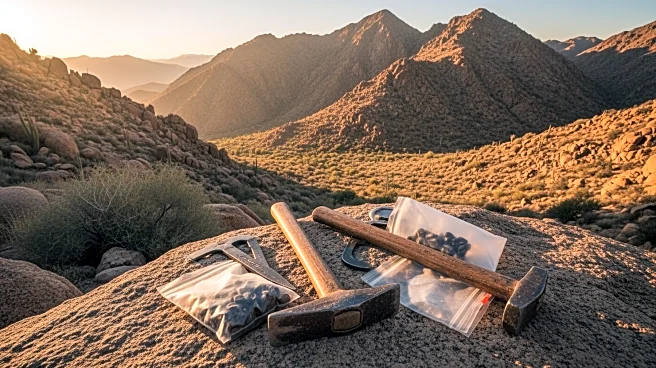
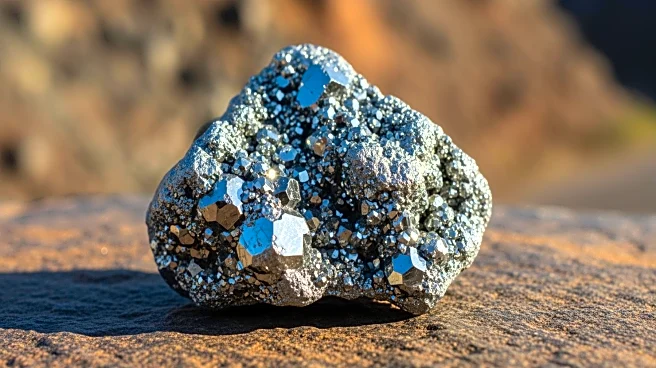
American Tungsten & Antimony has announced significant findings of high-grade antimony from its initial drilling at the Little Emma Prospect, part of the Antimony Canyon Project in Utah. The drilling program revealed shallow, high-grade stibnite mineralization,
which supports the company's geological model and suggests a promising continuity in the mineralized system. Key intercepts included 11.03 meters at 3.1% antimony and 2.62 meters at 12.54% antimony. The discovery underscores the potential for a substantial antimony system in the U.S., which is crucial given the country's current reliance on foreign sources, particularly China, for this critical mineral. Antimony is vital for national security due to its applications in defense systems, semiconductors, batteries, and advanced manufacturing.
Why It's Important?
The discovery of high-grade antimony in Utah is significant for the U.S. as it seeks to reduce its dependency on foreign sources for critical minerals. Antimony is classified as essential for national security, and the U.S. currently relies heavily on imports, primarily from China. Establishing a domestic supply could enhance national security and support industrial supply chains. This development aligns with broader efforts to secure critical mineral resources domestically, which is crucial for defense and technological industries. The findings at the Little Emma Prospect could lead to increased exploration and development activities, potentially boosting the U.S. economy and creating jobs in the mining sector.
What's Next?
American Tungsten & Antimony plans to continue its exploration efforts at the Antimony Canyon Project and other U.S. sites, including the Tennessee Mountain Tungsten Project and the Sage Hen Tungsten Project in Nevada. The company aims to re-establish domestic supplies of antimony and tungsten, which are vital for defense and industrial applications. As the project progresses, it may attract attention from policymakers and industry stakeholders interested in securing critical mineral resources. The success of these initiatives could influence future mining policies and investment in the U.S. mining sector.