






What's Happening?
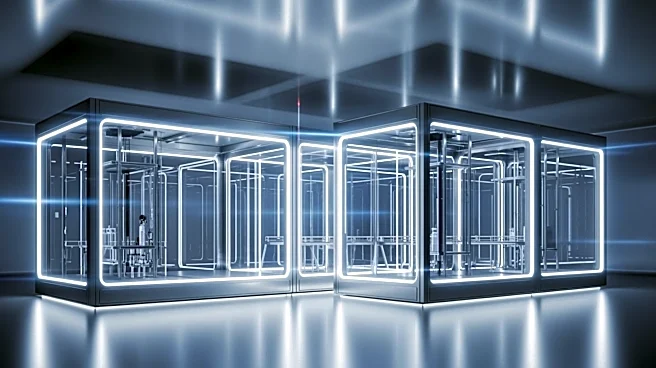
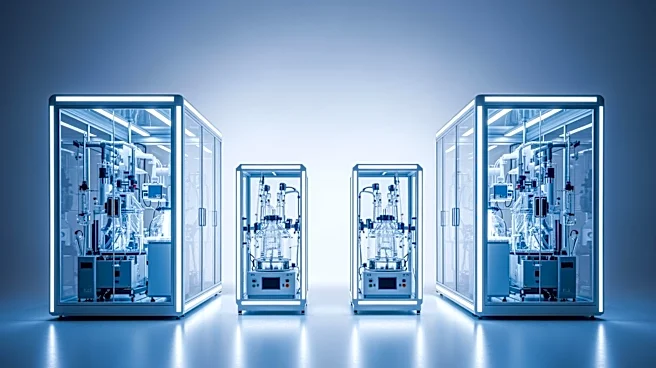
Sanofi has developed two identical modular facilities for vaccine and biologics manufacturing, located in Tuas, Singapore, and Neuville-sur-Saône, France. These facilities, known as Modulus, are designed to be highly flexible and capable of rapid reconfiguration
to accommodate different manufacturing needs. The facilities incorporate advanced automation and modular room configurations, allowing for quick product switches. This design has earned Sanofi the 2026 ISPE Facility of the Year Award in the Innovation - Facility of the Future category. The Modulus facilities utilize plug-and-produce process skids and moveable walls with advanced HVAC zoning to support multiple products simultaneously. The initiative also emphasizes sustainability, with innovations like a novel macerator system for recycling single-use biological waste.
Why It's Important?
The development of Sanofi's Modulus facilities represents a significant advancement in biopharmaceutical manufacturing, offering increased agility and efficiency. By enabling rapid reconfiguration and reducing changeover times, these facilities can better respond to evolving product pipelines and global health emergencies. This flexibility is crucial for maintaining a competitive edge in the pharmaceutical industry, particularly in the context of pandemic preparedness. The facilities' sustainable design also aligns with global efforts to reduce environmental impact, setting a benchmark for future biopharmaceutical manufacturing practices. The ability to maintain validated processes across multiple platforms enhances Sanofi's capacity to quickly scale up production in response to demand, benefiting public health and the company's market position.
What's Next?
Sanofi's Modulus facilities are poised to play a critical role in the company's future manufacturing strategy. The successful implementation of these facilities may encourage other pharmaceutical companies to adopt similar modular and sustainable approaches. Regulatory bodies may also look to Sanofi's model as a framework for approving new manufacturing technologies. As the facilities continue to operate, Sanofi will likely focus on optimizing their processes and exploring further innovations in automation and sustainability. The company's commitment to net-zero emissions by 2045 suggests ongoing efforts to enhance the environmental performance of its operations.
Beyond the Headlines
The Modulus initiative highlights a broader trend towards modularity and sustainability in manufacturing, which could have long-term implications for the industry. By reducing reliance on fixed infrastructure, companies can achieve greater operational flexibility and resilience. This shift may also drive changes in regulatory approaches, as agencies adapt to new manufacturing paradigms. Additionally, the integration of digital technologies and AI in these facilities reflects the growing importance of Industry 4.0 concepts in biopharmaceutical production. As these technologies become more prevalent, they could lead to further innovations in manufacturing efficiency and product quality.