



What's Happening?
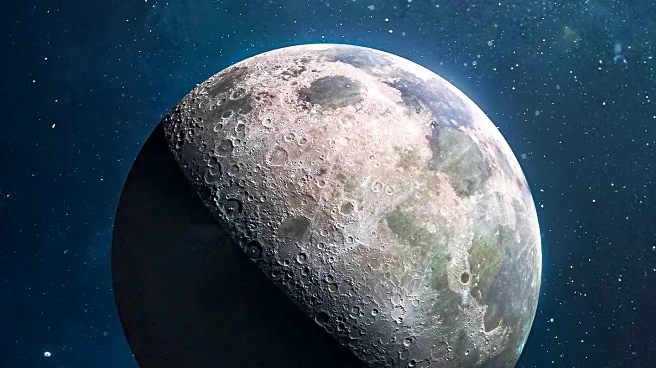
On March 3, 2026, a total lunar eclipse, known as a 'blood Moon,' occurred, captivating observers across North America, East Asia, Australia, and New Zealand. During the eclipse, the Moon turned a deep red as Earth passed between the Sun and the Moon, casting
a shadow on the lunar surface. The event was not visible in the UK, Europe, or Africa. The eclipse was highly anticipated and drew significant attention from skywatchers and photographers, who captured stunning images of the celestial phenomenon.
Why It's Important?
Lunar eclipses, particularly total eclipses, are rare and significant astronomical events that offer a unique opportunity for scientific observation and public engagement with astronomy. The 'blood Moon' phenomenon, caused by Earth's atmosphere refracting sunlight, provides insights into atmospheric conditions and celestial mechanics. For the public, such events spark interest in space science and encourage educational activities related to astronomy. The widespread visibility of this eclipse across multiple continents highlights the global nature of astronomical phenomena.