





What's Happening?
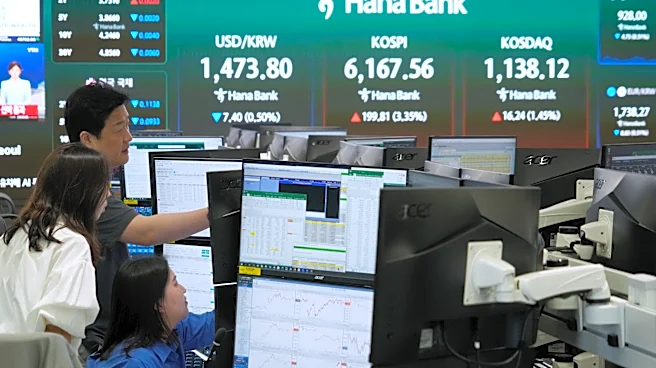
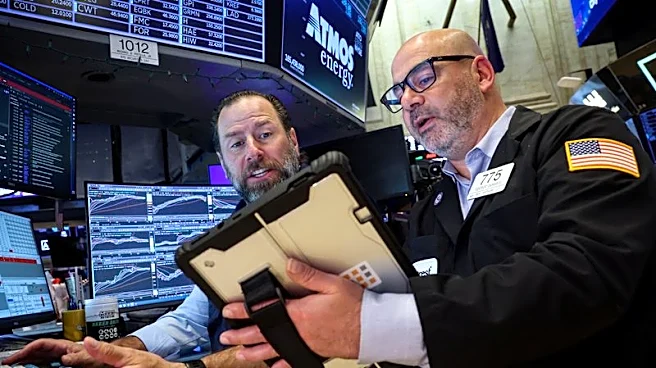
U.S. stocks are nearing record highs following a significant rally over the past two weeks, driven by hopes that the global economy can avoid severe disruptions due to the ongoing U.S.-Iran conflict. The S&P 500 has risen by 0.4%, approaching its all-time
high set in January, after previously experiencing a correction with a nearly 10% drop. The recent stock market surge is largely attributed to expectations of calming tensions in the U.S.-Iran war and the potential resumption of oil flow from the Persian Gulf through the Strait of Hormuz. Regional officials have indicated that the U.S. and Iran have reached an 'in principle agreement' to extend a ceasefire, allowing for further diplomatic efforts. Despite these developments, caution remains in financial markets, as oil prices continue to fluctuate.
Why It's Important?
The potential resolution of the U.S.-Iran conflict and the stabilization of oil prices are crucial for the global economy, which has been facing challenges due to high inflation and disrupted oil supplies. The International Monetary Fund has projected global inflation to accelerate to 4.4% this year, up from 4.1% in 2025, while downgrading its forecast for global economic growth. A successful diplomatic resolution could mitigate these economic pressures, allowing investors to focus on corporate profits, which are a key driver of stock prices. Positive earnings reports from major U.S. companies, such as Bank of America and Morgan Stanley, have contributed to the optimistic outlook, suggesting resilience in the American economy.
What's Next?
If U.S.-Iran talks proceed successfully, the conflict may become a temporary setback rather than a prolonged issue, potentially leading to a normalization of oil prices and inflation rates. This could shift investor focus back to corporate earnings and growth prospects, which have been positive despite the geopolitical tensions. Analysts are optimistic about continued growth, with technology stocks presenting compelling opportunities for investment. However, the situation remains fluid, and any disruption in diplomatic efforts could lead to renewed volatility in the markets.