





What's Happening?
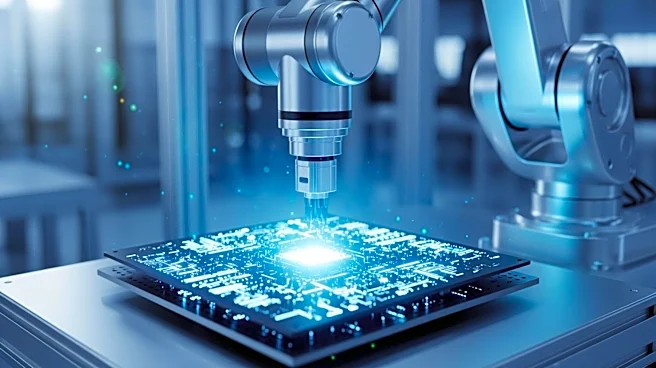
The landscape of factory automation is evolving, with a growing emphasis on software skills among workers. As robots become more integrated into production processes, the need for employees who can manage software interfaces, updates, and data-driven
decisions is increasing. The International Federation of Robotics reported that over half a million industrial robots were installed globally in 2024, highlighting the shift from hardware-focused automation to software-centric management. This change is evident in the concept of 'robot density,' which measures the number of robots per 10,000 manufacturing employees. In 2024, Western Europe had 267 robots per 10,000 employees, North America had 204, and Asia averaged 131.
Why It's Important?
The shift towards software-savvy workers in factory automation reflects broader trends in the manufacturing industry. As automation becomes more prevalent, the ability to interpret data and manage digital interfaces is crucial for maintaining productivity and efficiency. This transition presents both challenges and opportunities for the workforce, as employees must adapt to new roles that require a blend of technical and analytical skills. Companies that invest in training and upskilling their workforce will likely gain a competitive edge by maximizing the benefits of automation while minimizing downtime and errors.
What's Next?
Manufacturers are expected to continue investing in training programs that focus on digital literacy and software skills. As automation technology advances, the demand for workers who can bridge the gap between mechanical operations and digital management will grow. This trend may lead to the development of new educational programs and certifications aimed at equipping workers with the necessary skills. Additionally, companies may explore partnerships with tech firms to enhance their automation capabilities and ensure seamless integration of new technologies.