
What's Happening?
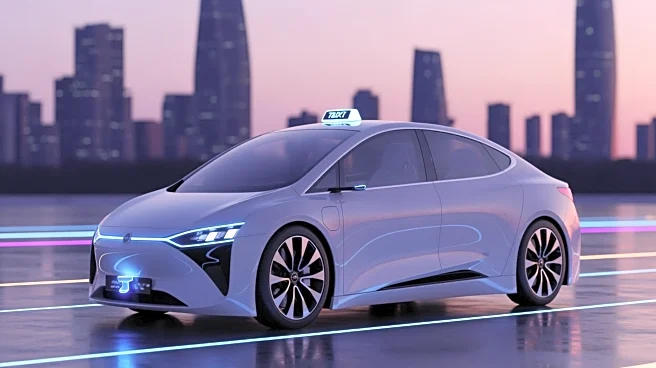
Zoox, an Amazon subsidiary, has launched a self-driving taxi service in Las Vegas, marking a significant milestone in autonomous vehicle deployment. The service utilizes Zoox's purpose-built robotaxi,
which operates without traditional driving controls such as a steering wheel or pedals. Currently, the service offers free rides between select locations on the Las Vegas Strip, with plans to expand to more destinations in the coming months. Zoox's vehicle is distinct from other autonomous services as it is designed specifically as a robotaxi, unlike competitors that modify existing vehicle models. The company plans to introduce paid rides once regulatory approvals are secured and aims to expand the service to other cities, including San Francisco, Austin, and Miami.
Why It's Important?
The launch of Zoox's self-driving taxi service represents a significant advancement in the commercialization of autonomous vehicles. By offering a fully autonomous ride-hailing service, Zoox is setting a precedent for the future of urban transportation. This development could lead to increased accessibility and convenience for passengers, reduce traffic congestion, and lower transportation costs. Additionally, the success of Zoox's service could accelerate the adoption of autonomous vehicles, prompting further investment and innovation in the sector. As cities and regulators adapt to this new technology, the implications for urban planning, public transportation, and environmental impact could be profound.
What's Next?
Zoox plans to expand its service to San Francisco next, followed by Austin and Miami. The company will need to navigate regulatory hurdles to introduce paid rides and ensure the safety and reliability of its autonomous vehicles. As Zoox expands its service, it may face competition from other companies in the autonomous vehicle market, such as Waymo and Tesla. The success of Zoox's service will depend on its ability to scale operations, maintain safety standards, and gain public trust. The broader acceptance of autonomous ride-hailing could lead to significant changes in transportation infrastructure and policy.