
What's Happening?
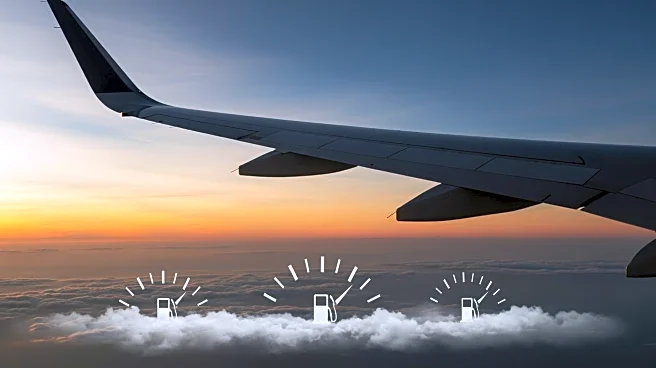
United Airlines is set to cut more flights over the next two quarters in response to anticipated high jet fuel prices, which are expected to remain elevated due to the ongoing conflict in Iran. The airline's CEO, Scott Kirby, communicated in a staff memo
that oil prices could rise to $175 a barrel and stay above $100 until the end of 2027. This scenario would significantly increase United's annual fuel expenses, potentially doubling the costs compared to its most profitable year. Despite strong travel demand allowing fare increases, United plans to cancel about three percentage points of off-peak flights in the second and third quarters, focusing on routes with weaker demand. The airline also intends to reduce capacity from Chicago O'Hare and maintain suspended services to Tel Aviv and Dubai, aiming to restore the full schedule by fall.
Why It's Important?
The decision by United Airlines to cut flights highlights the broader impact of geopolitical tensions on the aviation industry, particularly concerning fuel costs. As jet fuel prices surge, airlines face increased operational costs, which could lead to higher ticket prices for consumers. This situation underscores the vulnerability of airlines to external economic shocks and the importance of strategic planning to mitigate financial risks. The move also reflects the industry's reliance on fare increases and capacity management to offset rising expenses, a strategy that could affect consumer travel behavior and industry profitability. Additionally, the lack of fuel cost hedging by U.S. carriers compared to their European and Asian counterparts places them at a competitive disadvantage.
What's Next?
United Airlines plans to monitor the situation closely and adjust its operations as necessary. The airline aims to fully offset higher fuel costs through fare increases and capacity management. Other major U.S. carriers, like Delta Air Lines, may also consider similar strategies to manage the financial impact of elevated fuel prices. The industry will likely continue to advocate for policy measures that could stabilize fuel costs or provide relief. Stakeholders, including investors and consumers, will be watching closely to see how airlines navigate these challenges and whether they can maintain profitability without significantly impacting travel demand.